Tires are the unsung heroes of automotive safety. For over a century, they have served as the only physical link between a car and the pavement. It doesn’t matter if you have a V8 under the hood, carbon-ceramic brakes, or the latest stability control software. None of that matters if the rubber meets the road poorly. Every steer, stop, and acceleration is funneled through four tiny, notepad-sized patches of rubber.
Most drivers treat tire replacement like buying socks. Pick the cheapest pair that fits, or maybe one that looks cool. Wrong approach. Under-inflated, worn, or mismatched tires turn your vehicle into a liability. You endanger yourself, your passengers, and everyone else on the road. The market is flooded with options, and the average buyer doesn’t know how to navigate them. We’ve broken down exactly what you need to know before you spend your money.
Understanding Tire Anatomy and Construction
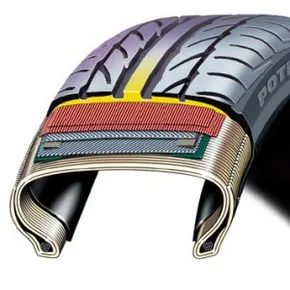
Forget the idea that a tire is just a donut of rubber. It’s a complex, flexible container designed to hold compressed air and support massive loads. Modern tires are built from the inside out, using between 19 and 25 distinct components.
The inner liner is the heart of the assembly. This layer maintains the tire’s shape and keeps the air inside. Wrapped around the liner is a fabric belt structure. The bead, located at the base of the tire, anchors this fabric to the wheel rim, ensuring a tight seal.
Above the fabric belts lie steel belts. These are non-negotiable for stability. They keep the tread pattern flat against the asphalt, maximizing the contact patch. More contact means better grip.
The sidewall dictates ride quality. A taller, softer sidewall absorbs potholes and imperfections, offering a cushy ride. A shorter, stiffer sidewall sacrifices comfort for sharper steering response and better cornering stability.
Decoding the Sidewall and Load Ratings
Every passenger car and light truck tire carries an alphanumeric code on its sidewall. This isn’t just branding. It’s technical data.
You’ll often see a “P” at the start, indicating a Passenger vehicle tire. An “LT” signifies a Light Truck tire, designed for heavier loads. Some tires display a “Max. Load” rating. This number is critical. When you replace tires, the new load index must match or exceed the original equipment specifications. Underestimating this requirement compromises safety and handling.
Selecting the Right Tire for Your Needs
Choosing the correct tire isn’t about aesthetics. It’s about matching the tire’s properties to your driving environment and vehicle dynamics.
Which Tire Type Fits Your Driving Style?
Not all tires are created equal. A tire designed for winter snow traction will fail miserably on dry summer asphalt. Conversely, a high-performance summer tire will become hard as rock and lose grip in freezing temperatures. You need to identify which category fits your climate and driving habits.
How Tire Composition Affects Performance
The materials used in the tire’s construction directly influence fuel economy, longevity, and handling. Softer compounds provide more grip but wear faster. Harder compounds last longer but may offer less traction. The balance between these factors determines the tire’s overall value.
Why Load Rating Matters for Safety
Using a tire with an insufficient load rating is dangerous. The tire may overheat, fail, or lose structural integrity under stress. Always verify that the load index on the new tire is equal to or greater than the factory specification. This isn’t a suggestion. It’s a safety requirement.
Where to Find Reliable Tire Information
Consult your vehicle’s owner’s manual or the placard located on the driver’s side door jamb. These sources provide the exact size, load index, and speed rating recommended by the manufacturer. Deviating from these specifications without understanding the consequences can void warranties and compromise vehicle safety.
Comparing Tire Brands and Models
Brand reputation matters, but specific models perform differently. Research reviews from trusted automotive publications. Look for tests that evaluate wet braking, hydroplaning resistance, and treadwear. Don’t rely solely on marketing claims. Real-world data tells the truth.
How to Evaluate Tire Tread Patterns
Tread patterns affect noise, water evacuation, and traction. Directional treads excel in wet conditions but must be mounted correctly. Symmetrical treads offer versatility and easier rotation. Asymmetrical treads combine features of both for optimal performance in varied conditions. Choose the pattern that aligns with your typical driving conditions.
The Impact of Tire Pressure on Fuel Economy
Under-inflated tires increase rolling resistance. This forces the engine to work harder, reducing fuel efficiency. Regularly check tire pressure when the tires are cold. Maintain the pressure specified by the manufacturer, not the maximum pressure listed on the sidewall.

Decoding the Sidewall Code
Choosing the wrong size is the single biggest error shoppers make when replacing tires. You need to look at the sidewall code to understand exactly what you are buying. Take this example: P195/60R16 63H M+S.
Each letter and number tells a specific story.
- P stands for Passenger vehicle. If it starts with LT, it is a Light-Truck tire. These handle higher loads and are common on pickups and SUVs. Just because you drive an SUV doesn’t mean you need LT tires. Many original-equipment specs call for passenger tires.
- 195 is the tread width in millimeters.
- 60 is the aspect ratio. This compares sidewall height to tread width.
- R means Radial construction.
- 16 is the rim diameter in inches.
- 63 is the load index. It shows how much weight that single tire can carry.
- H is the speed rating.
- M+S means Mud and Snow. It indicates all-season capability.
Heat is the enemy of rubber. The speed rating reflects a tire’s ability to dissipate heat. More heat means faster wear and a higher risk of failure. A higher speed rating handles long highway trips better by shedding heat. If you only drive around town, the speed rating matters less.
Speed ratings range from 99 to 186 mph. The most common are T (118 mph) and H (130 mph). Both exceed national speed limits and are great for highway driving. If you stick to low-speed urban streets, an S rating (112 mph) might be enough.
Load Ratings and Traction
Never swap in a tire with a lower load-carrying capacity than your original specs. The load index on the sidewall is non-negotiable for safety.
Traction is where safety really happens. Don’t just pick a tire based on looks. You need to balance dry, wet, and snow performance. If you live in a cold climate and want high performance, consider dedicated winter tires for the snowy months. If it is warm year-round, a touring tire will likely suffice.
Timing matters too. Most people wait until spring to buy tires. That is a mistake. As tires wear, dry traction improves, but wet and snow traction drops. Buy new tires in the fall.
Where to Buy New Tires
You have options. The traditional route is the dealership. They will install original-equipment tires. This is often the most expensive path, sometimes costing twice as much as a local shop.
A local shop, whether it is a national chain or a mom-and-pop store, is usually the best bet. The service manager can help you pick the right fit. Prices are reasonable, but you must shop around. Costs for tires and installation vary wildly.
Discount tire retailers offer steep prices and easy online ordering. But there is a catch. The tires ship to your door. You have to find a local shop to mount and balance them. Some discounters partner with local shops for discounted installation. This route works well if you need exclusive or hard-to-find tires.
If you buy online, add the cost of labor to your budget. Local shops charge for mounting, balancing, and disposing of old tires. Call several shops to get the full price for installation.
Questions to Ask Your Dealer
Bill VandeWater of Bridgestone Firestone North American Tire says a good dealer should ask you these questions before recommending a tire:
- What did you like about your original equipment tires?
- What didn’t you like?
- What are you looking for in a tire?
- What is important to you?
- How will you use the vehicle?
Use this info to guide your choice. The dealer should match your answers to a tire on their wall that fits your actual needs, not just the highest margin item.
Factor in Your Driving Habits

Plus Sizing and the Aftermarket Look
You can’t just slap on bigger rims and call it a day. If you’re chasing that aggressive stance or chasing better handling through plus sizing, you have to respect the engineering. It’s not just aesthetic. Bigger wheels and tires do improve cornering response and traction. But they also make the ride harsher. And they are often less durable than what came off the lot.
If you are serious about this, follow the rules. Make sure the new combo is approved for your specific vehicle. The replacement tire must carry the same load capacity as the OEM setup. Keep the overall diameter within 3 percent of the original. Miss that mark and you’ll mess with your speedometer and transmission. And don’t forget to install a new tire placard. Future owners need to know the correct pressure.
The Return of the Solid Ring
Tire tech is taking a weird turn. The biggest innovation is actually a step backward. Think back to the early days. Tires were solid rubber rings. They wrapped around wagon wheels. They rode hard. They were noisy. But you couldn’t puncture them. They lasted forever on rough terrain.
Today’s engineers want to kill the flat tire. They are trying to bring back that durability without sacrificing the air cushion. Enter the run-flat.
These aren’t solid anymore. They are complex assemblies. But the goal is the same. If you lose air, you keep moving. There are two main ways manufacturers achieve this.
Stiff-Sidewall Run-Flats
The first type relies on structure. The sidewalls are reinforced with extra rubber. This prevents deflection when pressure drops. You’ve probably seen these on sports cars. They are low-profile. The sidewalls can’t be tall, or they’d flex too much.
Drive them flat for about 50 miles. Keep speed under 55 mph. That’s the limit. After that, they are usually toast. Most can’t be repaired. Once the sidewall takes a hit, it’s done.
The PAX System
Michelin invented the second style. It’s called the PAX system. It’s not just a tire. It’s a package. Four parts. A special tire. A special wheel. An inner support ring. And a tire-inflation monitor.
When air escapes, the tire doesn’t collapse completely. It drops halfway. The tread rests on the inner ring. You can drive 125 miles at 55 mph. That’s double the range of most stiff-sidewall run-flats.
The PAX system also uses a special bead. This locks the tire to the wheel even without pressure. Traditional run-flats don’t do this. It’s a mechanical fail-safe.
And here’s the kicker. You can repair a PAX tire. If the puncture is in the tread and smaller than a quarter-inch, it’s fixable. Like a normal tire.
Because the inner ring supports the weight, the sidewalls don’t need to be as stiff. They can be taller. This means a better ride. Softer handling. That makes PAX ideal for SUVs. Minivans. Passenger cars. Not just track toys.
But wait. Is all that extra tech worth the cost? And does it actually help you save gas? Or is it just marketing fluff dressed up in rubber? That’s a question for the next section.

The Hidden Cost of Your Tire Choice
Fuel economy isn’t just about how hard you press the gas pedal. It’s about what’s rolling on the pavement. If you’re looking to squeeze more miles per gallon out of your ride, you need to understand that not all rubber is created equal. Swapping out your stock tires for something different can boost efficiency or tank it. There is no middle ground.
Bill VandeWater at Bridgestone Firestone North America puts it bluntly: your tire selection can swing your fuel economy by 15 to 20 percent. That’s a massive gap. It’s the difference between filling up twice a week or once. Yet, many buyers want that efficiency without sacrificing longevity or wet-weather grip. They want it all. And that’s where the compromise usually happens.
Despite the hype around green driving, fuel economy rarely tops the consumer wish list. Safety and wear life usually win. Because of this, replacement tires often aren’t optimized for efficiency. VandeWater notes that if maximizing fuel economy is your primary goal, stick to the original equipment manufacturer (OEM) tires. They are calibrated for your specific vehicle’s weight and aerodynamics.
Regulatory efforts to guide these choices have been messy. California and the federal government mandated tire labeling for fuel efficiency, aiming to inform buyers. But an L.A. Times report highlighted that implementation has been fraught with difficulty. Most drivers still don’t realize their tires are actively draining their tank.
Don’t overlook the basics. Proper air pressure is non-negotiable. Check your owner’s manual for the recommended PSI. Monitor it regularly. Underinflated tires create drag. Drag kills mileage. Keep them topped off, and you’ll see the numbers climb.
New vs. Used Tires: Is the Savings Worth the Risk?
You’ve seen the piles. Discarded tires lined up like grave markers on the side of rural highways. It’s a common sight. But should you buy used tires to cut costs? And will they hold up?
Most people buy new. Some look at the bargain bin. The temptation is real, especially when you find a deal like “buy three, get the fourth free.” You don’t need that fourth tire. But it’s free. A barely worn tire from that bundle might be a smart financial move. It saves money without sacrificing much life.
Here is the risk. Used tires hide defects. Punctures. Dry rot. Tread wear that isn’t obvious at a glance. If you go this route, you have to inspect closely. Use the penny test. Place a penny in the tread grooves with Lincoln’s head upside down. If you can see the top of his head, the tread is too low. The tire is done.
Even if the tread looks okay, you don’t know what’s inside. A used tire might have been plugged or patched before. That’s a bad idea. Repaired tires are less reliable. They degrade faster. And they won’t stop as quickly. Wet roads will expose these weaknesses instantly.
New tires come with warranties. Used tires come with uncertainty. If you want peace of mind, buy new. The upfront cost is higher. The long-term risk is lower.
Selecting Tires Based on Tread Wear
When it comes to longevity, tread wear index (TWI) is your best metric. It’s a comparative rating found on the tire’s sidewall. Higher numbers mean longer life. But it’s not absolute. A tire with a TWI of 400 doesn’t necessarily last twice as long as one with a TWI of 200 in every condition. Variables like driving style, road surfaces, and climate play huge roles.
However, the TWI gives you a baseline. If you live in a city with smooth highways, a higher TWI tire makes sense. You’ll get more miles before needing a replacement. If you drive on rough, gravel-heavy roads, that number means less. The tread will chunk and wear faster regardless of the rating.
Consider your driving habits. Do you accelerate hard? Do you brake late? Aggressive driving eats tread. It also eats fuel. There’s a feedback loop here. Hard driving lowers your MPG and shortens tire life. Smooth driving does the opposite.
Matching tread wear to your needs requires honesty. Do you replace tires when they’re bald? Or do you wait until the law requires it? Waiting cuts your safety margin and your resale value. Replacing them early cuts your wallet. Find the balance that fits your budget and your risk tolerance.
The tire industry shifts. New compounds emerge every year. What was considered best practice five years ago might be obsolete today. Stay informed. Keep checking your pressure. Inspect your tread. Your car will thank you. Your wallet might too.
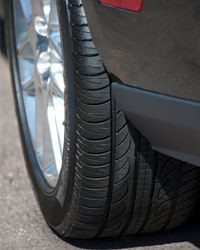
Road texture plays a huge role in how quickly your rubber hits the pavement. Curves, potholes, and rough surfaces accelerate tread wear. If you enjoy dragging your tires or performing burnouts, don’t expect them to outlast their warranty.
Average all-season tires typically cover 40,000 to 100,000 miles. High-performance all-seasons might last between 40,000 and 70,000 miles. Top-tier performance tires? No guaranteed tread life. They often wear out before hitting 25,000 miles.
Manufacturers base longevity estimates on controlled testing, not real-world chaos. To gauge actual wear, check the Uniform Tire Quality Grading (UTQG). The U.S. Department of Transportation mandates this label for tread wear, temperature resistance, and traction. A UTQG tread wear rating of 300 suggests the tire should last three times longer than a tire rated at 100. Temperature ratings use an A to C scale. Traction ratings range from AA down to C.
UTQG helps compare tires within the same brand. It’s less reliable when comparing different manufacturers. Each company interprets the grading system differently.
Stick to Manufacturer Recommendations
Vehicle makers specify tire sizes and types for a reason. They account for weight, load capacity, off-road capability, and steering geometry. Changing these specs affects handling.
Plus sizing can alter your driving experience. But it also messes with your speedometer. Most speedometers calculate speed based on tire revolutions. A larger tire takes longer to complete one revolution. The speedometer, calibrated for the original size, will read lower than your actual speed.
Electronic automatic transmissions also suffer from size changes. Shift timing depends on wheel speed sensors. Wrong tire size throws off shift points. This impacts fuel economy, hill climbing, and general drivability.
Downsizing tires brings its own headaches. Smaller tires put extra stress on the rubber. They may not handle the vehicle’s load without a different rim. The car might scrape. The suspension might bottom out.
You can change tire diameter or aspect ratio. But you must maintain correct load capacity. You must adjust for speedometer errors. Ignoring these factors leads to broken parts and poor performance.
Maintain Your Vehicle Before Installation
Maintenance costs money. Ignoring it costs more. When your car is on the lift for new tires, your mechanic has easy access to other components.
Check CV joints, tie rods, brakes, and suspension. Bad shocks or struts cause uneven tire wear. You’ll burn through your new tires prematurely. Fixing suspension issues now saves money later.
If your shocks and alignment are good, check the brakes. Many shops charge a flat diagnostic fee. Doing multiple repairs at once eliminates duplicate charges. If your brakes are shot or your CV joint clicks, fix it now.
Eliminating suspension problems extends tire life. It also keeps you safer on the road. Don’t skip the inspection.
Read the reviews.

Beyond the Purchase: Sourcing the Right Rubber
You can buy tires with a single click, but buying the right tires takes a moment of patience. Before you hand over cash, look for data on fuel efficiency, tread life, and noise levels. Subscription services like Consumer Reports break these metrics down into dry braking, wet braking, hydroplaning resistance, and ride comfort. Compare these specs against your budget. The most expensive option isn’t always the winner.
How to Maintain Your New Tires for Longevity
Getting the rubber on the ground is only half the battle. Proper maintenance dictates whether those tires last three years or three months. Neglect leads to uneven wear, which spikes road noise, kills fuel economy, and ruins wet-weather traction.
Rotation schedules depend on your drivetrain. For front-wheel-drive vehicles with uniform tire sizes, move the front tires straight back and cross the rear tires forward. Rear-drive setups reverse this pattern. Four-wheel-drive and all-wheel-drive systems usually require an X-pattern: left-front to right-rear, and right-front to left-rear.
Sport cars and some luxury SUVs often use unidirectional tires. These have tread patterns optimized for a specific rotation direction marked on the sidewall. You must rotate them front-to-rear only, never side-to-side, to keep the revolution direction intact. If your vehicle includes a full-size spare, standard practice places it in the right-rear slot. Always check your owner’s manual for the specific procedure for your chassis.
Why Tire Pressure Matters for Safety and Efficiency
Inflation isn’t just about the gauge; it’s about physics. Correct pressure reduces heat and friction, boosting fuel economy and slowing wear. Under-inflation softens the sidewalls, destroying cornering precision. Over-inflation causes center wear. Both scenarios lead to premature replacement.
This is critical for SUV and truck owners. Load capacity drops as pressure falls. Load an SUV for a family trip without adjusting tire pressures, and you risk a catastrophic failure. The tires heat up under the extra weight, potentially blowing out on the highway.
Tires naturally lose 1 to 2 psi every month. Temperature swings accelerate this. For every 10°F drop, pressure falls by another psi. A tire set to 35 psi in 80°F weather could drop to 23 psi by the time temperatures hit 30°F. That loss in pressure degrades wet traction, increases wear, and ruins MPG.
Finding More Tire Buying Tips
For additional advice on selecting and caring for your rubber, explore the resources linked on the next page.