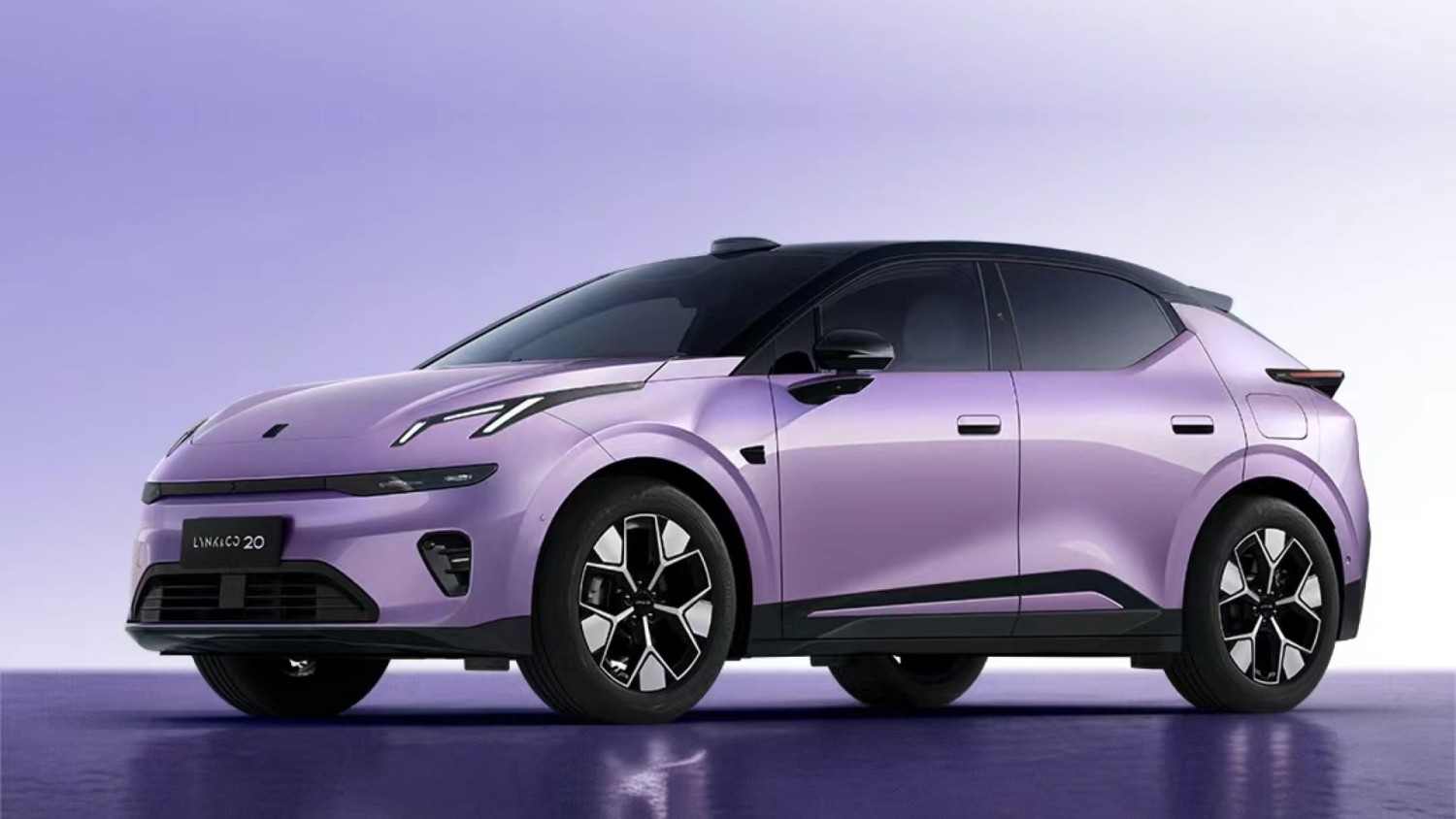
Geely is betting everything on integration. Not just stacking parts together, but melting them into a single block. The 16-in-1 integrated electric drive is no longer just a spec sheet bragging rights item for internal prototypes. It is coming to a car you might actually buy. Specifically, the updated Lynk & Co 04 — well, the Lynk & Co 120, known globally as the Z20 — becomes the first vehicle to launch with this hardware.
This isn’t happening quietly. Geely Auto executives revealed the tech publicly in July, initially highlighting the Galaxy TT sedan as a testbed. That sedan hasn’t even started domestic sales yet. But by July 17, Lynk & Co confirmed the facelifted fastback crossover would take the lead. The Z20. In China, it wears the number 20 badge. Everywhere else? You’re looking at the Lynk & Co Z20 facelift with integrated drive system.
So, what actually goes inside this thing called “Thunder”?
Inside the Geely 16-in-1 Electric Drive Architecture
Geely doesn’t call it a motor anymore. They call it Thunder.
It’s a mouthful of acronyms packed into one physical space. We’re talking about twelve hardware elements fused together:
– Electric motor
– Motor controller
– Reducer
– DC-DC converter
– OBC (On-board Charger)
– PDU (Power Distribution Unit)
– HBMS and LBMS (High/Low Voltage Battery Management Systems)
– VCU (Vehicle Control Unit)
– TMS (Thermal Management System)
– Active pre-charge control
– Power domain gateway
That’s twelve. Plus four software capabilities layered on top: energy, charging, motion, and health management. All of this results in a peak efficiency rating of 93.8 %. That is higher than most traditional EV drivetrains can manage today.
How 16-in-1 EV Integration Saves Space and Energy
Longer wires mean more resistance. Resistance means heat. Heat means energy you can’t use. Simple physics, annoying for your bank account.
The new Thunder drive cuts high-voltage wiring by 30 %. Geely engineers shrunk the entire unit’s height to below 325 millimeters. Think about what that space was used for before. It wasn’t magic. Now? That volume is free. Engineers can shove more battery packs there, or maybe add steer-by-wire tech if Geely gets around to it. You could get more trunk space. Maybe a frunk if the design allows.
Then there is speed. The control system response time dropped from 40 milliseconds to just 2 milliseconds. For a driver, 20 milliseconds sounds like nothing. For an electric motor reacting to your foot off the pedal? It is instant. The Galaxy TT already showed the potential, hitting 8.2 kWh per 100 kilometers in a Guinness World Record run. Lower parts count (down 180+) means lower manufacturing costs, too.
Should You Buy an EV With Fully Integrated Electronics?
It works great until it doesn’t.
Here is the problem nobody puts in the brochure: repair costs. In a traditional EV setup, modules like the OBC or the DC-DC converter live in separate boxes. Why? Because batteries die, chargers fail, and motors run for decades. Different lifespans demand different replacements.
With the 16-in-1 design, everything is welded or glued or potted into a single sealed unit. If your charging module fails in three years, you can’t just pop the old one out. You likely have to replace the motor, the controller, the whole shoot-em-all. It forces dealers to deal in assemblies, not parts. It makes DIY repair impossible. Is saving 180 parts during production worth paying double during a warranty claim? We’ll find out.
Which EV Features 16-in-1 Tech in 2026?
If you are hunting for the Lynk & Co 05 rear axle integrated drive — wait, correction, the updated Lynk & Co 140 electric crossover specs show a rear-mounted unit.
Lynk & Co confirms this first commercial application lands on the rear axle. The motor produces 245 kilowatts, which converts to about 329 horsepower. That’s decent. Not Porsche fast, but adequate for a subcompact fastback.
But the headline isn’t just power. It’s voltage. The new Lynk & Co vehicle features an 800-volt architecture. This unlocks 6C ultra-fast charging technology. Charge fast. Drive longer. Wait less.
Expect it to hit shelves in Q3 of 2026. Not before.
Is integration the end game for EV engineering? Probably. Does it fix the repair nightmare? Probably not.
You wait two years to drive it.