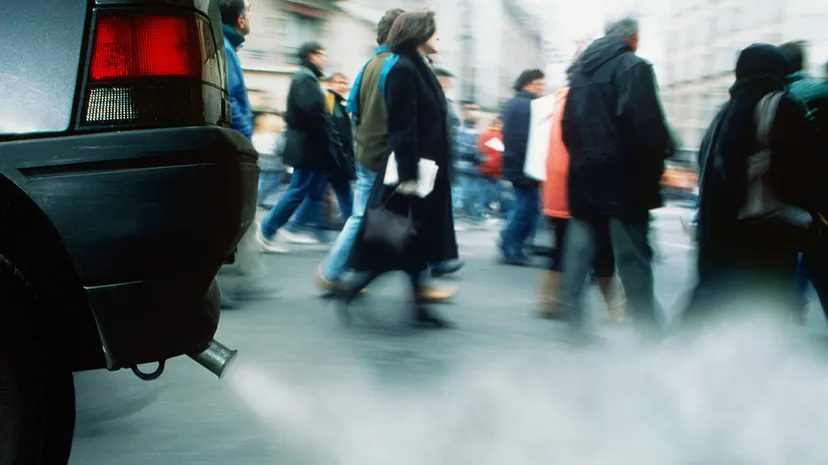
The black plumes rising from diesel tailpipes used to be enough to make anyone hold their breath. For decades, the narrative was simple: diesels are dirty. They burn cleaner on fuel consumption but emit a cocktail of toxins that left a bad taste in the air—and literally in our lungs. But the story is shifting. A new international study published in Scientific Reports suggests that modern diesel vehicles might actually be cleaner than their gasoline counterparts when it comes to specific airborne pollutants.
The research team zeroed in on passenger vehicle exhaust, focusing on carbonaceous particulate matter (PM). This isn’t just dust you can see. We are talking about inhalable solids and liquid droplets, some 30 times smaller than a human hair. These particles form when organic compounds react with gases like nitrogen oxides (NOx) and sulfur oxides (SOx) in the atmosphere.
Understanding Carbonaceous Particulate Matter
Not all PM is created equal. The study highlights carbonaceous PM, a toxic mix of black carbon, primary organic aerosol (POA), and secondary organic aerosol (SOA). Most emissions from passenger cars fall into the SOA category. High levels of SOA are nasty for human health, posing significant respiratory risks.
Regulations have tightened over the years. The U.S. Environmental Protection Agency (EPA) has long mandated testing for vehicle and fuel emissions to keep these levels in check. But enforcement has a history of being complicated.
The Volkswagen Wake-Up Call
Remember 2015? It was a rough year for diesel credibility. Millions of Volkswagen owners discovered their diesel engines were emitting NOx at 40 times the legal limit. NOx helps create smog, acid rain, and ground-level ozone. It was a massive blow to the diesel reputation.
Historically, diesel engines have held up their end of the bargain on carbon dioxide (CO2) emissions, usually beating gasoline engines there. But they’ve been notorious for spewing higher levels of NOx and fine particulate matter. Older diesels, lacking modern filtration tech, remain a contentious topic in environmental debates.
The Lab Test: Cold Starts and Filters
The new study tried to cut through the noise with a rigorous lab test. Researchers didn’t just rely on standard drive-up inspections. They captured real-time raw exhaust and diluted samples under controlled conditions: -7°C (19°F) and 22°C (72°F).
The results were stark. Modern diesel cars equipped with particulate filters outperformed gasoline cars in reducing carbonaceous PM. The gasoline cars emitted significantly more of these toxic aerosols.
“The gasoline cars emitted on average 10 times more carbonaceous aerosol at 22 °C and 62 times more at −7 °C compared to diesel cars,” the researchers reported.
Why the massive gap in the cold? It comes down to the cold start. When you fire up a gasoline engine in freezing weather, the catalytic converter hasn’t reached its operating temperature yet. Combustion efficiency drops, and unburned hydrocarbons escape as particulate matter. Diesel engines, often designed for higher compression and different combustion cycles, handled the cold start better in this specific metric.
The NOx Trade-Off
There is a catch, though. While diesel cars won the particulate matter war in the lab, they lost the NOx battle. The team found that diesel engines emitted 10 times more NOx than gasoline cars at both temperatures.
This creates a complicated picture. Do diesels pollute less? It depends on how you define pollution. If you are worried about SOA and fine particulates, modern diesels with filters are the winner. If you are focused on NOx and the smog it creates, gasoline takes the lead in this specific test.
Real-World Caveats
Lab data is clean. Real-world driving is messy. The study acknowledges that standard driving cycles don’t always reflect actual use. On longer highway journeys, diesel emissions might spike. High-speed driving introduces variables the lab didn’t test.
Additionally, particulate filters themselves aren’t magic. They can produce nitrogen dioxide, a known respiratory irritant. So, while the filter traps soot, it may be contributing to other chemical problems in the air.
The Verdict: It’s Complicated
The debate over which engine is greener isn’t going away. The International Council on Clean Transportation noted that in 2015, nitrogen oxide emissions from diesel vehicles were linked to 107,600 premature deaths globally. That’s a heavy toll.
On the other side, regulatory frameworks are evolving. The EPA’s Tier 3 standards, rolled out between 2017 and 2025 in the U.S. and Canada, aim to slash both tailpipe and evaporative emissions. These standards are expected to drive real-world NOx emissions to their lowest levels yet.
Until then, the air remains a mixed bag. You can buy a diesel and breathe easier from soot, or you can buy a gas car and hope the catalytic converter warms up fast. The chemistry is the same either way, but the outcome changes based on the engine, the weather, and the road.
In 2016, total U.S. carbon dioxide emissions from aviation and motor gasoline combustion hit approximately 1.147 billion metric tons. That accounts for about 22 percent of all U.S. energy-related CO2 emissions.
The numbers don’t lie. The engine choice you make today is just one variable in a massive, ongoing equation.