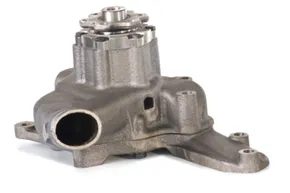
You probably don’t spend much time staring at the internals of your engine bay. It’s hidden away. But the small, often overlooked components are what keep the whole show from falling apart. Take the water pump. It’s not glamorous. It’s just a mechanical part doing a heavy job. Without it, your engine cooks itself from the inside out.
So, how long does it actually last?
The water pump is the heart of your cooling system. When you’re driving, the engine generates insane heat. Internal combustion is basically controlled explosions happening 5,000 times a minute in a tight space. The water pump circulates coolant—antifreeze mixed with water—through the cylinder head and engine block. It pulls the heat away. Then it sends that hot fluid to the radiator. The radiator cools it down. The pump pushes it back in. Repeat.
This cycle doesn’t stop. Not until you turn the car off.
Water Pump Longevity and Lifespan
Water pumps are built to last. They aren’t meant to be frequent replacements. Manufacturers design them to outlast many other components. The general rule of thumb? Replace the water pump when you replace the timing belt.
Why? Because they’re often driven by the same belt.
In most modern vehicles, the water pump is driven by the timing belt or an accessory drive belt. This belt spins a pulley on the outside of the pump. That rotation turns the internal impeller. The impeller moves the coolant. If you’re replacing the belt, you’re already halfway there. It makes sense to swap the pump while you have access.
Those belts typically last between 60,000 and 90,000 miles. So, expect your water pump to last about that long too. Some might go longer. Some might fail early. But the manufacturers want these things to last. A failed water pump is a catastrophic event for an engine. It causes overheating. It warps heads. It blows gaskets. It costs a fortune.
Warning Signs of a Failing Water Pump
You don’t want to wait for the engine to boil over. There are signs. Look for them.
First: leaks. Coolant leaking around the water pump casing is a major red flag. Most pumps have a “weep hole.” This small opening is designed to let coolant escape if the internal seals start to fail. It’s a warning shot. If you see puddles or dampness near the pump, the seals are shot.
Second: noise. A healthy water pump is quiet. If you hear grinding or whining, something is wrong. The impeller might be defective. Or worse, it might be slipping off the drive shaft. When the impeller spins independently of the shaft, it stops moving coolant. The engine overheats quickly.
Timing Belt Water Pump Replacement
Most people aren’t diagnosing their own water pump issues. That’s fine. You don’t need to be. Just remember the maintenance schedule.
When the manufacturer recommends changing the timing belt, change the water pump. Don’t skip it. The labor to access the pump is the same. The cost of the part is negligible compared to the cost of an overheated engine.
It’s simple logic. If the belt drives the pump, and the belt is old, the pump is old. Replace them together.
Stay ahead of the heat. Keep an eye on the weep hole. Listen for the grind. Your engine will thank you.