


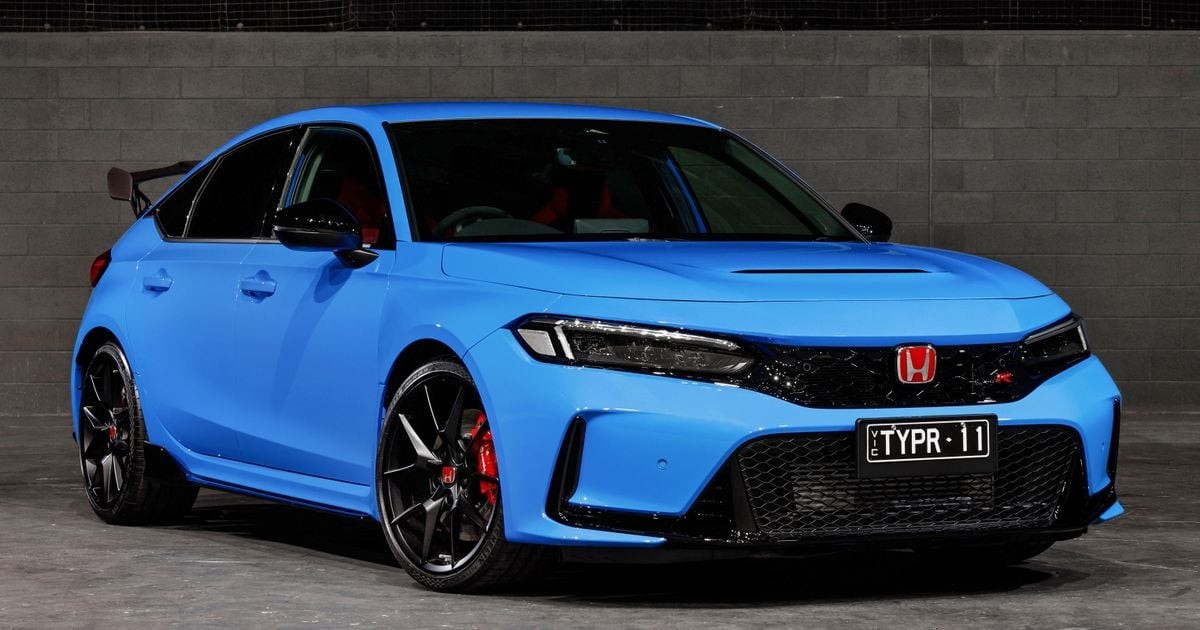
100 units. That was it.
They hit the digital shelves last Thursday, and half were gone by bedtime. Rob Thorp, Honda Australia’s director, wasn’t surprised. He told CarExpert that by the month’s end, those 100 cars would be history. Again.
It happens every time.
The Math
$85,000. Drive away.
It feels expensive, sure. But look at 2022. Back then, you could grab one for $72,600. Now it’s $12k more.
You get a 2.0-l turbo. 235kW. 420Nm of torque. All to the front wheels. A six-speed manual sits between your feet. No automatic here. This is a proper driver’s car.
Four colors only. Sonic Gray, Championship White, Crystal Honda Black, Racing Blue.
“Half of them went the first day,” Thorp said. “We expect that allocation to be pretty close to exhausted by the end of the month.”
Why So Few?
It isn’t just supply chain chaos.
It’s the rules. Specifically, Australia’s New Vehicle Efficiency Standard. Introduced in 2025, it fines brands if their average fleet emissions miss the mark.
The Type R emits 273g CO2 per km. That is… not great for the planet. And certainly not great for compliance targets.
Honda has to balance the hot hatch with cleaner stuff. The new electric Honda Super-One, arriving later this year, helps offset the penalties. The hybrid models do too. But can they offset it enough?
Maybe not.
The penalties get steeper every year until 2029. That means the cost of importing a Type R rises. And who pays for that?
You do.
More? Maybe. Cheaper? Unlikely.
Thorp thinks more are coming. He didn’t promise dates or quantities. “I’m not in a position to confirm,” he said. He just knows the factory is open to sending more because the demand is there.
But “balance” is doing a lot of heavy lifting. Production caps. Emissions math. Customer hunger.
Will future batches cost more than $85k?
Probably.
So here’s the question: Is the Type R worth the penalty? For 100 lucky Australians in this batch, the answer is yes. They clicked “order” at 3:00 PM on July 6 and got what they wanted.
The rest? Well. We wait.


