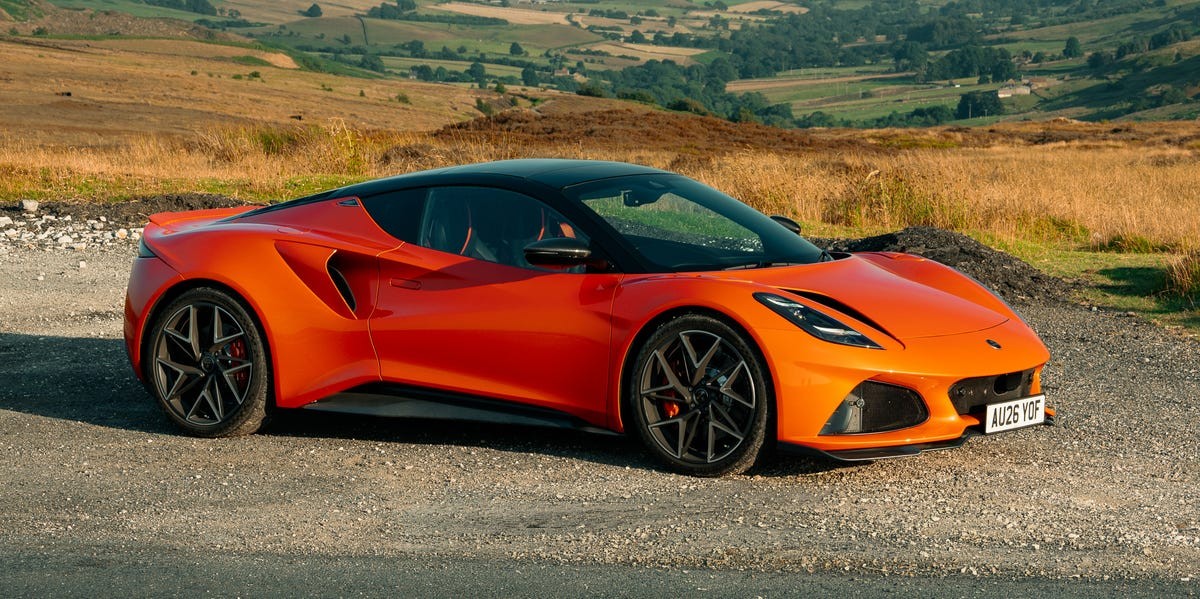
The 2027 Lotus Emira feels like a time capsule. It scratches an itch that electric hypercars and smartphone-on-wheels sedans simply can’t reach. It is lightweight, purpose-built, and aggressively analog.
You sit behind the wheel of a two-seat coupe. A turbo four or a supercharged V-6 hums midship behind you. Six-speed manual is on the table, though only if you pick the V-6. The experience is raw. It is racy. It demands attention.
But here is the catch. This is a boutique sports car from a tiny automaker. It comes with compromises. The fit and finish? Not on par with the Chevrolet Corvette. The interior luxury? Lacking compared to a Maserati GranTurismo. The price tag sits firmly in the six figures.
Why do people buy it? For the feeling. That’s always been Lotus’s delivery system. And the Emira delivers it in spades.
What’s New for the 2027 Model Year
Lotus tweaked the lineup this year. The main addition is the 420 Sport trim. It sits above the standard Turbo SE. The difference? An extra 14 horsepower, pushing output to 414 hp.
You can spec the 420 Sport with a Lightweight Handling package. This matters. It sheds 55 pounds. How? A titanium exhaust replaces the steel one. Various parts get swapped for carbon fiber alternatives.
The package also includes aero tweaks. More downforce. Better airflow to the radiators. It even adds new two-way adjustable dampers from Multimatic.
Elsewhere? A removable glass roof panel is now an option across all trims.
Pricing and Which Engine to Choose
This is where the rubber meets the road. You have two engine choices. Both are capable. Both are distinct.
- Turbocharged 2.0-liter Four-Cylinder: Sourced from Mercedes-AMG. Standard on SE trims (400 hp). Upgraded to 414 hp in the 420 Sport. Paired exclusively with an 8-speed dual-clutch automatic.
- Supercharged 3.5-liter V-8: Sourced from Toyota. Makes 400 hp. Paired with either a 6-speed automatic or the only available 6-speed manual transmission.
Want the manual? You buy the V-6. It’s a strict rule.
Why the Steering Feels Different
Most modern sports cars use electric power steering. It’s precise, but sterile. The Emira uses hydraulic assist.
It provides feedback that is almost unnerving. You feel the road through the wheel. During testing, the balance was brilliant. The steering was communicative. The car wants to involve you in every turn.
It isn’t perfect. The manual shifter requires a deliberate push to move gears quickly. The brakes can be grabby. They are hard to modulate smoothly if you aren’t used to them. But the 420 Sport’s dual-clutch transmission? It’s quick, smooth, and handles the extra power with ease.
How Fast Is the Lotus Emira Really?
Speed isn’t the Emira’s primary selling point, but the numbers are respectable.
- V-6 Manual: 0-60 mph in 4.3 seconds. Quarter-mile in 12.7 seconds @ 111 mph.
- Turbo Automatic: 0-60 mph in 3.4 minutes.
For comparison, a Nissan Z Performance manual hit 60 in 4.5 seconds and ran the quarter-mile in 13.0 seconds. The Nissan costs less than half the price. But you aren’t buying the Lotus for straight-line speed. You’re buying the intensity.
Fuel Economy and Real-World Usage
Let’s talk efficiency. It’s not high. But it’s not terrible for a mid-engine sports car.
- Turbo Auto: 18 mpg city / 26 mpg highway / 21 mpg combined.
- V-6 Manual: 16 mpg city / 24 mph highway / 19 mpg combined.
The EPA estimates hold up. The manual V-6 guzzles a bit more. The turbo auto is the fuel saver here.
Interior, Comfort, and The Infotainment System
The cabin is minimalistic. Intimate. Just seats for two. The driver faces a squared-off wheel and a 12.3-inch gauge cluster.
Materials look upscale, but this is a stripped-back machine. Frivolities are checked at the door. There are physical switches for climate controls, which is a relief. Cupholders exist in the console. Door bins fit half-liter bottles.
The Tech Specs
- Infotainment: 10.2-inch touchscreen.
- Connectivity: Wireless Apple CarPlay and Android Auto. Bluetooth.
- Audio: Standard 7-speaker stereo. Optional 11-speaker KEF system.
There are no physical buttons for the radio. You use a knob on the console or the steering wheel. It’s functional, if slightly austere.
Cargo Space:
You get seven cubic feet behind the seats. Five more cubic feet behind the engine. Do not store temperature-sensitive items in the rear. It sits right next to the exhaust. It gets hot.
Safety Features and Warranty Coverage
Lotus is breaking with tradition here. The Emira offers driver-assistance tech.
- Standard: Automated emergency braking, blind-spot monitoring, parking sensors.
- Optional: Adaptive cruise control, rear cross-traffic alert.
The warranty? Not great. Compared to rivals, it’s lacking.
- Limited Warranty: 3 years / 36,000 miles.
- Powertrain: 3 years / 36,300 miles.
- Maintenance: None.
No complimentary maintenance. That stings. But you pay for the brand, not the service plan.
Final Thoughts
The Emira is a contradiction. It’s a modern car with soul. It’s expensive, but cheap in spirit.
Is it the last true Lotus sports car? Probably. A new V-8 hybrid supercar is in development, possibly reviving the Esprit name. It might be worth waiting for.
But for now? The Emira stands alone. A raw, manual-friendly, analog experience in a digital world. You’ll never drive anything else quite like it.
Just keep an eye on the brake pedal.