The myth of the outlaw biker was forged in fire and gasoline in the late 1940s. After World War II, veterans returned home to suburban quiet but missed the adrenaline. They wanted the road. They wanted the rumble of an engine and the wind in their faces. Riding with the boys, drinking, and living fast became the new normal for men who had seen combat.
Then came Hollister.
The 1947 rally in California spiraled into chaos. Drunken riders tore through town, crashing into buildings and restaurants. The media painted a picture of pure anarchy. It wasn’t the whole story, but the public panic was real. The American Motorcycle Association had to step in. They issued a statement to calm the nation. Ninety-nine percent of clubs were decent citizens, the AMA said. Just one percent were the troublemakers. That one percent grabbed the title.
They adopted the “1 percenter” patch. It became a badge of defiance.
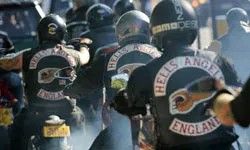
Today, groups like the Hells Angels deny being criminal syndicates. Sonny Barger, the founder, insists the organization doesn’t endorse drug dealing or violence. Some members may cross the line, he argues, but the club itself stands above it. Law enforcement disagrees. The FBI lists these groups as organized crime. They see drug trafficking and turf wars. They see a threat to public safety. From the U.S. to Australia, police treat them as serious dangers.
Let’s look at who they are. Starting with number 10.
10: The Finks
Australia has long been a haven for outlaw motorcycle gangs. The wide-open highways and rugged terrain suit the lifestyle. Local chapters of global gangs like the Outlaws and Hells Angels operate there. But Australia also breeds its own. The Rebels are well known. The Finks are infamous.
The group formed in Adelaide in the 1960s. They quickly became enemies of the state. By the late 2000s, they were locked in a violent war with Australian police.
Leadership claims they are misunderstood. They say they are just guys who get into trouble. Their look supports this narrative. Most outlaw gangs wear patches with flaming skulls or demonic imagery. The Finks chose a different path. Their colors feature a tipsy court jester. The grinning face looks silly, not threatening.
The Australian government sees it differently. They see criminals. Members face charges for drug trafficking. They face charges for violent assaults. There were even plans to assassinate a police officer. In 2009, the South Australian government labeled the Finks the province’s number one criminal threat. They are not playing games. They are waging war on the law.
9: The Mongols
The Mongols started as a small club in California. They grew into a global empire. Their reach extends across the U.S., Canada, and beyond. They are known for their size and brutality. They control significant portions of the drug trade. Their conflicts with other gangs often result in bloodshed. The Mongols do not hide their criminal nature. They embrace the outlaw label. They are one of the most dangerous groups in the world.
The Mongols: Small in Number, Massive in Violence
Named after Genghis Khan’s sprawling empire, the Mongols Motorcycle Club is a geographic anomaly. Formed in East Los Angeles in the late 1960s, it remains a relatively compact organization with about 70 chapters across the U.S. and roughly 800 members. Most of these riders operate out of California. While they don’t crack the top tier of the “Big Four” outlaw motorcycle gangs recognized by federal law enforcement, they compensate for their smaller footprint with extreme aggression.
Their rise in Southern California wasn’t accidental. In the 1980s, the Mongols engaged in a brutal turf war that saw them wrest control of key territory from the legendary Hells Angels. The Angels have never managed to reclaim that ground. The Mongols’ strategy relied heavily on forging alliances with Hispanic street gangs in L.A. This coalition did secure turf but also triggered racially motivated violence targeting African-American gang members and even unaffiliated Black civilians. The Bureau of Alcohol, Tobacco, Firearms and Explosives (ATF) currently labels the Mongols as the single most dangerous and violent outlaw motorcycle gang in the country. In 2008, a massive federal takedown led to 61 indictments for drug trafficking, racketeering, and murder across the Southwest.
Black Pistons: The Enforcers for the Outlaws
The Black Pistons Motorcycle Club is a newer player, established in 2002, but it has expanded with alarming speed. Today, it boasts 70 chapters in 20 states, over 200 members, and a presence in Canada and several European nations including Germany, the U.K., and Belgium.
Their role is specific: they serve as the official support club for the Outlaws Motorcycle Club, one of the world’s largest “1 percenter” organizations. In gang hierarchy, this makes the Black Pistons the muscle. They handle the dirty work the parent club wants to distance itself from, such as distributing narcotics and assaulting the Outlaws’ rivals. This rapid expansion has sparked tension. In the summer of 2002, a new chapter in Portland, Maine, drew rival gangs into the city, forcing police to work overtime to prevent a full-blown turf war from igniting.
Sons of Silence: Heavily Armed and Isolated
Holding sway over parts of the Southwest and the Rocky Mountains, the Sons of Silence Motorcycle Club operates 30 chapters in the U.S. and five splinter clubs in Germany. The club has approximately 275 members. Founded in Niwot, Colorado, in the 1960s, the Sons have been locked in turf disputes with rivals like the Outlaws since their inception.
Their alliances are risky. The Sons are one of the few 1 percenter clubs allied with the Hells Angels, a move that creates a vast list of enemies. They offset this vulnerability with heavy firepower. A 1999 multi-state raid on clubhouses in Kansas, Colorado, and Arizona uncovered an arsenal capable of supporting a small militia. Confiscated items included dozens of machine guns, pipe bombs, and hand grenades. Their motto, “Until Death Separates Us,” is famously misspelled in Latin on their patches, a detail that speaks to their rough-around-the-edges origins.
The Role of Women in Outlaw Motorcycle Gangs
The culture of these clubs is strictly patriarchal. Women are almost universally banned from membership. This tradition dates back to the clubs’ early days as male-exclusive hobby groups seeking escape on the open road. Women associated with the clubs are dubbed “old ladies” and are treated as the property of the male members they are linked to. While they cannot wear club colors, they often wear patches designating them as “property of” a specific gang or individual.
Vagos Motorcycle Club: The Loki Clan
On the West Coast, the Vagos Motorcycle Club stands out with around 300 members and 24 chapters. They operate in Hawaii and along the U.S.-Mexico border. Their symbol is Loki, the Norse god of mischief, a fitting emblem for a group involved in cross-border drug smuggling with Mexican carters, according to U.S. law enforcement.
Founded in the 1960s, the Vagos have grown increasingly violent in recent decades. A 2009 trial highlighted this escalation: a former president of the San Bernardino chapter was charged with murder after allegedly ordering members to drive a victim into the desert and kill him. The motive was a disagreement over the price of a motorcycle. In another instance, a Vagos member broke into a home, stole cash and drugs, and then shot the homeowner in the head. The line between biker club and criminal enterprise continues to blur with each incident.
The Pagan’s: Small Footprint, Massive Danger
Based in Maryland since 1959, the Pagan’s Motorcycle Club holds a spot among the infamous Big Four outlaw motorcycle gangs, but size is not their defining metric. They operate with roughly 200 to 250 members across 41 chapters. Their territory is concentrated in the Mid-Atlantic, with a heavy stronghold in Pennsylvania.
Don’t let the smaller numbers fool you. The FBI and Bureau of Alcohol, Tobacco, Firearms and Explosives (ATF) view the Pagan’s as exceptionally dangerous. Their network extends far beyond biker bars. They maintain close ties to the Italian mafia and the Aryan Brotherhood, a white supremacist prison gang that has explicitly declared war on non-white races. This kind of alliance isn’t just for show. It fuels their involvement in a violent cocktail of crimes.
The Pagan’s traffic in meth, cocaine, and PCP. They are also linked to arsons, bombings, assaults, and murders. They illegally stockpile machine guns. Initiation isn’t handed out lightly. Prospects must steal motorcycles to prove their worth.
Violence is routine, not exceptional. In the early 2000s, Pete Overly, a chapter leader, was convicted for attacking a couple over a dispute regarding bike parts. He shocked them both with a taser. He broke the woman’s foot with a steel-toed boot. He bludgeoned the man with a steel baton.
Just to be initiated into the group, members first need to steal motorcycles to prove they’re worthy.
Most riders don’t fit this profile. The “99 percent” of bikers are often just people enjoying the open road. Take the Buffalo Soldiers and Troopers Motorcycle Club. This predominantly African-American organization honors black soldiers from the American Civil War. They work to project a positive image through charity work and community support, riding their hogs to build bridges rather than burn them.
Bandidos Motorcycle Club
If the Pagan’s are a regional threat, the Bandidos are a global force. Founded in Texas in 1947, they have grown into one of the largest and most notorious outlaw motorcycle gangs in the world. Their structure is hierarchical and militaristic, with a national president, vice presidents, and a clear chain of command that spans continents.
The Bandidos are deeply entrenched in international drug trafficking networks. They move vast quantities of narcotics across borders, utilizing their extensive chapter network to distribute product in North America, South America, Europe, and Australia. This global reach brings them into constant conflict with rival gangs, particularly the Hells Angels. The feud between these two giants has sparked violent clashes, turf wars, and high-profile assassinations for decades.
Like the Pagan’s, the Bandidos are designated as a criminal organization by law enforcement agencies worldwide. They are involved in extortion, racketeering, and violent intimidation. Their “patch” is a symbol of allegiance to the club above all else, including the law. Membership often requires a background in crime or a willingness to engage in it. The loyalty demanded is absolute. Betrayal is met with severe, often fatal, consequences.
The Bandidos’ history is marked by legal battles and attempts to tarnish their public image. They have invested significant resources in public relations efforts, trying to distance
The Bandidos Motorcycle Club operates with a scale that demands attention. Starting in 1966, the group has ballooned to roughly 2,000 full-patch members. That number feels small until you factor in their network of puppet clubs, often called “duck clubs.” These subsidiaries do the dirty work, taking heat for illegal activities while shielding the main leadership. With chapters spanning 16 U.S. states and at least 14 countries, law enforcement now categorizes them firmly among the Big Four outlaw motorcycle gangs.
The name itself is a nod to the Frito Bandito, the mascot for Fritos corn chips. It sounds playful. It isn’t. Headquartered in Texas, the Bandidos control vast swaths of the Southwest. Their primary revenue stream is cross-border drug trafficking. But money isn’t the only driver. Violence is a tool they wield globally. Grenade bombings in Norway. Arson attacks in Brisbane, Australia. Shootouts in Canada. These aren’t random acts; they are calculated turf wars.
3: Outlaws Motorcycle Club
The Outlaws Motorcycle Club, also known as the American Outlaws Association or Outlaws Nation, lacks the pop-culture fame of their rivals. Yet they hold a historical title. They were the first outlaw motorcycle club, forming in 1936 as the McCook Outlaws in Cook County, Illinois. Their aesthetic owes a debt to 1953’s The Wild One. The club adopted their colors from the design on Marlon Brando’s leather jacket, ironically using imagery from a film based on the Hollister riot that helped spark the entire subculture.
Today, the Outlaws are a powerhouse. They boast 1,700 members across 176 chapters in 13 countries. They dominate the Great Lakes region of the United States. Their feud with the Hells Angels is legendary and bloody. To fund their lifestyle and war chests, they cook and distribute crystal meth. Cocaine and MDMA are also part of the inventory.
Their reach extends deep into Canada, where they battle other factions for control of the cross-border drug trade. The legal troubles are extensive. In the U.S., members have faced charges for arson, murder, kidnapping, explosives, robbery, and operating prostitution rings. Convictions vary, but the accusations are severe. Down under in Australia, the Outlaws have been charged with assaulting police, attempted murder, and planting bombs inside rival vehicles.
2: The Warlocks
Even in the criminal underworld, the Warlocks are pariahs. Active in Pennsylvania and Florida, this outlaw motorcycle gang is viewed with disdain by peers. Even rival groups like the Pagan’s Motorcycle Club consider themselves too respectable to associate with them. The Warlocks are seen as “low lives.”
Their emblem is a harpy, a winged monster from Greek mythology. It fits their reputation. Since their founding in the late 1960s, they have been entrenched in drug dealing and violent crime. One incident stands out. In 1988, after The Breed Motorcycle Club attacked Warlocks members drinking at a Pennsylvania bar, retaliation was swift. Fellow Warlocks kidnapped Breed chapter leader Craig “Coyote” Gudkneckt. They tied him up and beat him repeatedly with the butt of a handgun. Gudkneckt reported the abuse to police, and the perpetrators eventually went to jail.
Violence isn’t limited to rival gangs. In 1995, a Warlock known as “Mudman” was convicted of murdering a police officer. He had been pulled over and feared being returned to prison for a parole violation. He killed the officer instead. “Mudman” later died in a prison brawl. The Warlocks operate with a brutality that even other criminals find excessive.
1: Hells Angels
If the Bandidos are the expansionists and the Outlaws are the historians, the Hells Angels Motorcycle Club are the apex predators. Founded in 1948 in California, they are arguably the most recognizable name in the world. Their logo—a winged head of a devil—is iconic. But recognition brings heat. The Hells Angels are deeply entrenched in international crime networks, moving drugs across continents. They are the standard against which other outlaw motorcycle gangs are measured, not just in size, but in the sheer intensity of their conflicts. Their influence reaches into Europe, Australia, and South America, creating a global web of loyalty and violence that is difficult for any single government to dismantle.
The Global Reach of the Hells Angels Motorcycle Club
You can argue about danger levels or age, but when it comes to name recognition, no Hells Angels Motorcycle Club comes close. The name is practically a synonym for “outlaw biker” now. They dominate the headlines. A 2009 study of international newspaper coverage between 1980 and 2005 highlighted 51 alleged crimes tied directly to the Angels. They are everywhere. Roughly 2,500 members hold patches across 250 chapters in 26 countries spanning six continents.
The FBI groups the Hells Angels Motorcycle Club with the “Big Four” outlaw motorcycle gangs. Why? Drug dealing. Weapon trafficking. Violent crime. They don’t just talk about turf; they fight for it. Look at California, where they clashed violently with the Mongols. Look at Quebec, where a war against rival gangs left bodies in the water. One Canadian Angel admitted to killing 43 people during the 1970s and 80s. In 1985, internal politics turned lethal. When a chapter was deemed unworthy of the name, six members were executed. Their bodies were dumped in the St. Lawrence River.
From Counterculture Heroes to Public Enemy #1
The Hells Angels Motorcycle Club traces its roots to the dawn of the “1 percenter” era. Men from clubs involved in the infamous 1947 Hollister incident formed the Angels in San Bernardino, California, just a year later. For a while, they were almost romanticized. Hunter S. Thompson’s book, Hell’s Angels: A Strange and Terrible Saga, and gritty 1960s exploitation films painted them as rugged countercultural heroes.
Then came Altamont. The Rolling Stones organized a free concert in Northern California. The Angels provided security. It went wrong. One Angel, claiming to be on the payroll, stabbed an 18-year-old man to death in the crowd. The biker walked free. Acquitted, but the damage was done. The public image shattered. No more heroes. Just dangerous thugs.