The electric vehicle revolution is no longer a niche curiosity. This is mainstream. But every time a new electric car hits the road, new problems arise. Can I plug it into the wall outlet in the living room? Is this the right way to charge an electric car? Most people believe they need a station installed by a professional. The reality is messier. And more flexible.
you have a choice.
Basic information: Plug-in Types
First, let’s clear up a bit of terminology confusion. You may hear terms like level 1, level 2 and DC fast charging. These refer to the power supply speed, not just the physical plug.
Level 1 charging is charging that takes place from a standard home socket. In North America this is a 120 volt plug. In Europe and many other regions, the standard outlet is 230 volts. You can use a standard wall outlet. But don’t expect miracles.
It’s very slow. Terribly slow.
Most electric cars have a portable charging cable. Plug one end into the wall. Plug the other end into your car port. that’s it. No installation required. No permits. Connect and wait.
How long will it take?
If your electric car has a 60kWh battery, you can go about 3-5 miles per hour on a level 1 charge. Is it fully charged? It takes 20-40 hours. This is not practical for everyday use unless you drive less than 20 miles a day. This is a backup. Or a vacation home strategy.
Sockets: are they safe?
This is the part that the manufacturers do not shout about. It is safe to use a standard wall outlet. If you did it right.
Old wiring. Shared circuits. Thin gauge wires. These are risks. Your home’s electrical system has limitations. Connecting a high-current appliance to a circuit where a refrigerator or toaster is already running can trip the circuit breaker. In the worst case, it can cause a fire.
**Check circuit. **
Before you start your electric car every night, find out the capacity of your home. A separate 15 amp or 20 amp circuit is ideal. If your car draws 12 amps and other devices draw 10 amps at the same breaker, you’re in trouble.
Use a surge protector. Never use chain extension cords. Do gas stations sell those cheap, thin extension cords? Avoid them. They get even hotter. They melt. they are dangerous.
“The safest way to charge at home is with a dedicated circuit that is properly grounded.” — General safety guide for electric vehicles
When installing a dedicated charging station
Most drivers require more than just a wall outlet. Level 2 charging for daily driving.
Level 2 uses 240 volts. In North America this would be something like a clothes dryer or an oven outlet. In Europe it is usually a specialized Type 2 socket. This requires professional installation.
Why install a dedicated station?
Speed.
With a level 2 charge you can travel 30-40 miles per hour. A full charge takes 4-8 hours. Overnight after charging
AC and DC: Power distribution for charging electric vehicles
Electric cars don’t just run on electricity. They use two different currents, so if you mix them up, something you thought would charge in minutes could end up in a charging station for hours. In France, the two currents coexist on the network, but the cars handle them differently.
First is alternating current (AC). This is the basis of the daily charge. You can find it in your garage or most public stations. It is very versatile. Supports slow charging at home and, depending on the hardware, fast charging in public spaces.
Then there is direct current (DC). This is a heavy hitter. DC is designed for speed and produces high power, typically 50 kW or more. This can be seen in motorway service areas and dedicated fast charging centres. Bypasses the internal charger and injects energy directly into the battery.
Outlet: Handy, but with some precautions
Can I plug my electric car into a regular socket? Yes. Should I do it? Please proceed with caution.
Using an outlet is a practical first aid solution, but it is very time consuming. To prevent wires from overheating, this setting is capped at 10 amps (2.3 kW). Modern electric cars with large batteries can take more than 10 hours to fully charge.
Warning: Check your home’s installation before connecting to the mains. Old wires cannot withstand the load.
Right to charge (Droit à la Prise)
There is no problem if you live in an apartment building or a shared house. French law gives every resident (tenant or owner) the right to request a charging point for electric vehicles.
You pay the installation costs yourself. By law, the property manager must allow this. This is not luxury. This is right.
European connector standards: chaos until 2025
Charging ports for electric vehicles in Europe are currently fragmented. This confuses buyers. The EU aims to solve this problem with mandatory requirements for Type 2 and CCS combination connectors in 2025 (Directive 2014/94/UE). Until then, you need to know what you’re looking at.
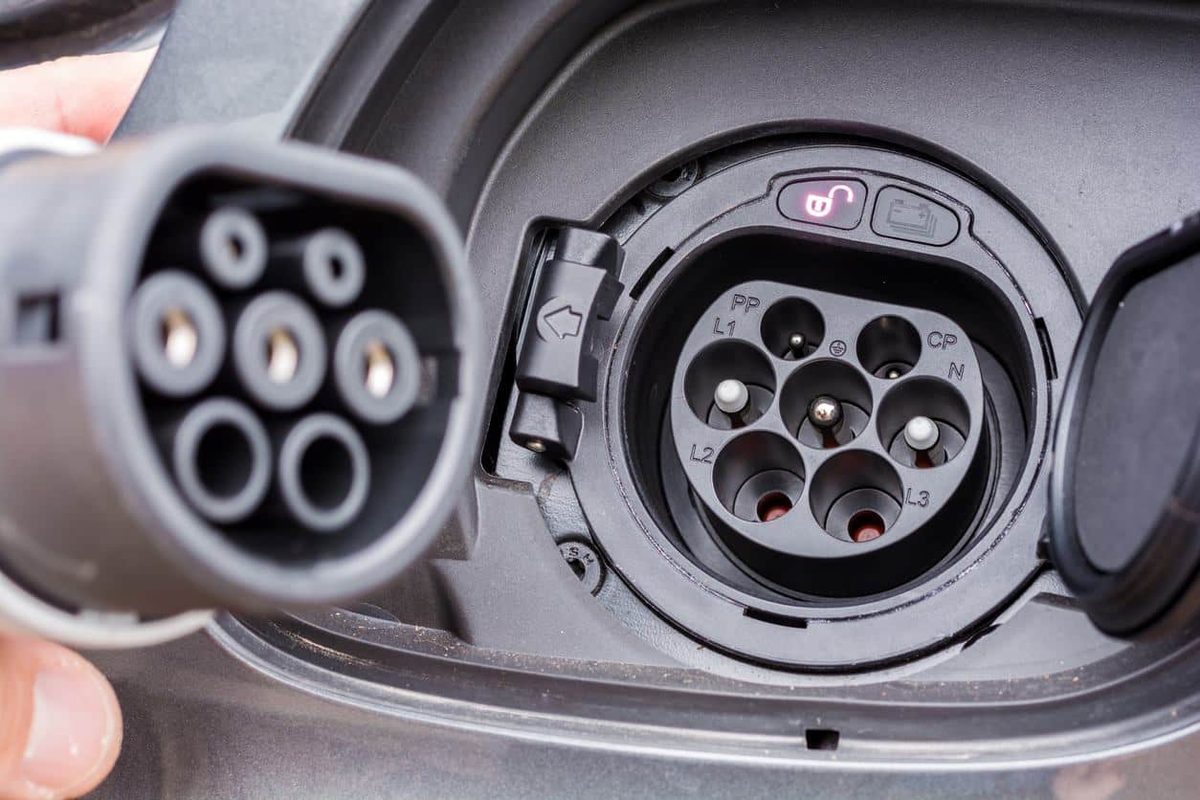
Type 2 (Mennekes)
This is the standard for AC charging. These connectors, also known as “Mennekes”, are everywhere. Supports slow home charging via Wallbox or public AC station. It is very durable.
The 7-pin connector supports single-phase up to 70 amps and three-phase up to 63 amps with a maximum voltage of 500 V. It also supports fast charging up to 43 kW. It’s the Swiss Army Knife of connectors.
CCS Combination (Type 2 Extension)
If Type 2 is used for AC charging, CCS (Combined Charging System) is used for DC fast charging. Add two extra pins to the bottom of the Type 2 connector.
This is the fast charging standard. Almost all new electric cars sold today are equipped with this port. Capable of supporting power levels above 100 kW. Efficient models up to 250 kW are also available. If you’re in a hurry, this is the port you need.
Green’up: Reinforced Outlet
Not everyone wants a perfect Wallbox installation. Enter Green’up. This is an intermediate solution for people who need more power than a standard outlet but are not ready to use a separate charging station.
This is a reinforced socket. It contains a differential circuit breaker and is connected directly to the electrical panel via a separate insulated wire. Charges compared to standard outlets without the complexity of a full charger.
Installation: Do not do it yourself
Thinking of installing a charger? Stop.
This is not a weekend project. You must hire a licensed electrician. Alternatively, contact your charging service operator to guide you through the process. The equipment must be IRVE certified (Infrastructure de Recharge pour Véhicules Électriques). Quality is important. Improper installation may cause a fire and void the warranty.
Charging Times: why it matters
“How long does it take to load?” There is no single answer. The list of variables is quite long.
Factors include:
– Charging method (socket and fast charger).
– Battery capacity.
– Used cables and connectors.
– Year of the vehicle.
– Type of current (single-phase vs. three-phase).
Here is the realistic breakdown for a standard EV:
- Domestic socket: More than 20 hours. Basically it charges while you sleep and then charges again.
- Reinforced (Green’up): One night. You get your range back in the morning.
- Separate charging station: Charge to 100% in 1-4 hours.
The difference between 20 hours and 4 hours is huge. Choosing the right infrastructure is not just about convenience. It all depends on how you use your car.