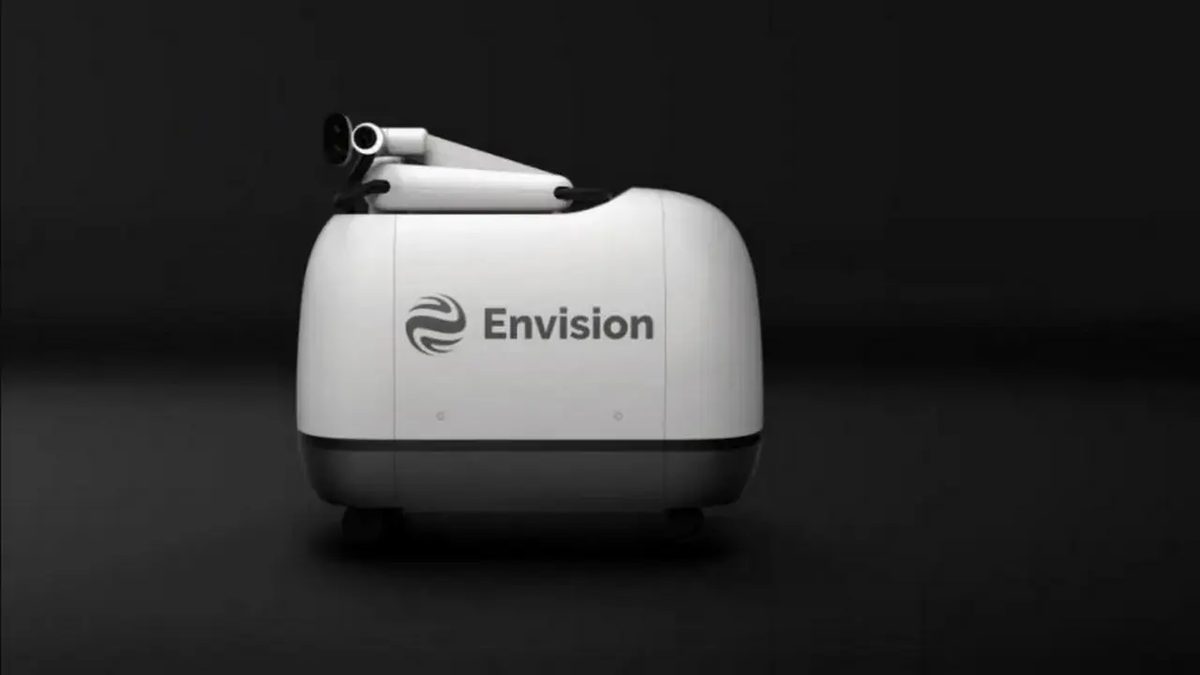
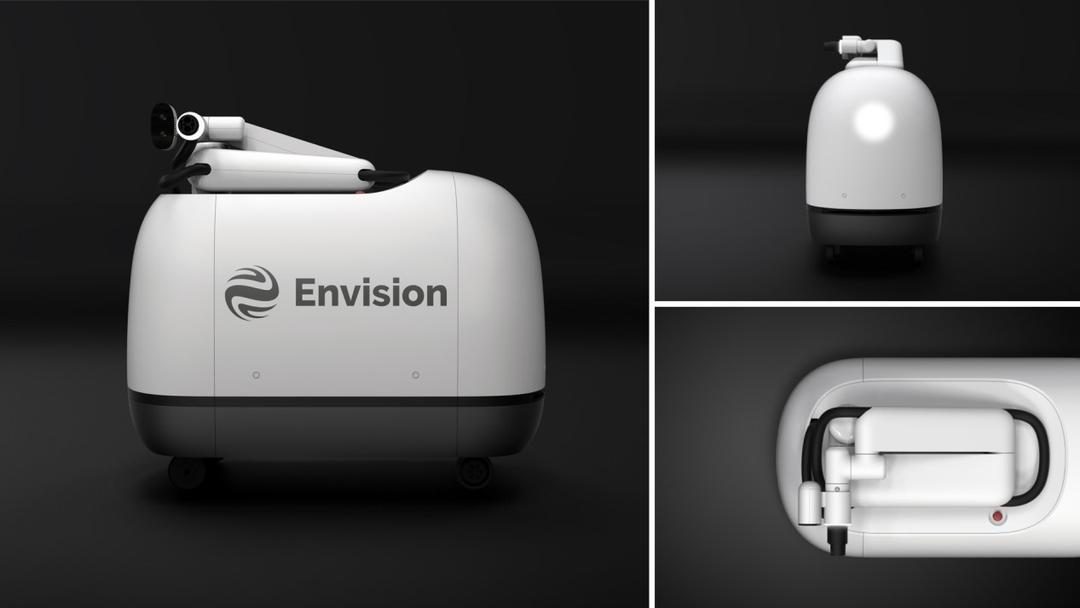
Mochi usually brings to mind soft, chewy rice cakes. It doesn’t conjure images of automotive infrastructure. But in China, this name signals a shift in how electric vehicles get power. The country is already deep into the electric vehicle adoption phase. Government policies push for zero-emission goals. The market is hungry for solutions that remove range anxiety. Enter Mochi. It is a mobile charging robot designed to fill gaps in the charging network. Envision, the manufacturer, claims it works with most EVs on the road today.
“This device becomes the first series-produced intelligent mobile charging robot powered 100% by green electricity.”
The robot was unveiled during Envision’s Carbon Zero Day event in Shanghai. This isn’t a prototype. It is a series-produced unit ready for commercial release. That launch date lands in June. Drivers won’t just see these robots. They will interact with them via a dedicated app. The integration is seamless. You reserve a charge. The robot comes to you.
Why does this matter for EV infrastructure? Static charging stations have limits. They take up space. They require complex wiring. A mobile robot bypasses those constraints. It brings the power to the car. This is particularly useful in dense urban areas where installing new fixed chargers is difficult or impossible.
The environmental angle is specific here. Envision emphasizes the power source. It’s not just electric. It’s green electric. This aligns with China’s broader ecological ambitions. The robot itself is compact. It fits into tight spaces where a charging kiosk would be too bulky.
How does it actually work? The user opens the Mochi app. They select a service. The robot locates their vehicle. It connects and delivers charge. The compatibility claim is broad. Most electric vehicles currently on the market are supported. This reduces the friction for early adopters. You don’t need a specific brand of charger. You just need a robot that can reach your battery port.
June is the deadline. The hardware hits the market. The software service launches simultaneously. This dual approach suggests Envision is betting on both the physical asset and the user experience. The robot is the tool. The app is the interface. Together, they form a new layer of EV infrastructure.
The implications for urban planning are significant. Cities might rely less on massive charging depots. They could distribute charging capacity through a fleet of these robots. This decentralizes the grid load. It also offers flexibility. If a neighborhood needs more charging power, more robots can be deployed. It’s a scalable solution.
Is this the future of charging? It’s a compelling alternative to fixed stations. It moves the infrastructure to the vehicle rather than the other way around. The compact design allows it to operate in places fixed chargers cannot reach. For EV drivers in China, this means more options. Less waiting. More convenience.
The technology is specific. The market is ready. The timing aligns with China’s push for green mobility. Mochi isn’t just a robot. It’s a response to the limitations of current infrastructure. It’s a mobile solution for a stationary problem. And it starts in June.
42 kW de puissance réelle pour une autonomie de 600 km
La capacité de la batterie d’Envision est de 70 kWh. La puissance de sortie atteint 42 kW. Le robot Mochi peut recharger un véhicule électrique en deux heures. Cela offre une autonomie de 600 km. Le temps est court. La portée est longue.
Environ 9% des ventes de voitures en Chine provenaient de véhicules électriques en 2020. 1,37 million de voitures. Un chiffre massif. Envision exploite plus de 200 gigawatts d’énergie renouvelable à travers le monde. Ce système permet une charge 100% écologique.
Le robot utilise l’EnOS™ d’Envision. Il se connecte au réseau d’énergie renouvelable. L’utilisateur profite d’un trajet propre. La gestion de l’énergie est intégrée au logiciel.
Une fois la session réservée, les conducteurs peuvent partir. Le robot repère le véhicule. Il utilise une technologie de localisation précise. La recharge se fait automatiquement. Pas besoin de rester.
La sécurité de la batterie est surveillée en temps réel. Une inspection complète a lieu à chaque recharge. Le système est vigilant. Les risques sont minimisés.
Envision est un concepteur d’éoliennes intelligentes. Des centres de R&D existent en Asie, en Europe et en Amérique du Nord. Plus de 2.400 éoliennes sont installées. Des logiciels sont fournis pour plus de 6.000 machines. La technologie est éprouvée. La portée est globale.
Le marché automobile chinois est le plus grand au monde. Les ventes de VE augmentent rapidement. La demande de recharge rapide est forte. Mochi répond à ce besoin. La technologie est prête. L’avenir est électrique.
“Le robot s’occupe de repérer le véhicule grâce à sa technologie de localisation précise et la rechargera automatiquement.”
La puissance de 42 kW est significative. Deux heures suffisent. 600 km d’autonomie. C’est beaucoup. Envision gère 200 gigawatts. C’est énorme. Les éoliennes tournent. Les batteries se remplissent. Les voitures roulent.