We’ve all been there. You’re trying to load your sedan with a pile of clothes, a week’s worth of groceries, and maybe your friend’s dog. It feels easy to handle until you turn a corner and the suspension bottoms out. To make matters worse, you try to lift 20 boxes at once and almost drop one on your foot. People have their limits. Our backs, arms, and balance are not designed for industrial-scale transportation.
Cars are no exception. Overloading your car doesn’t just make your life more difficult. This puts a strain on the engine. You are stressing the transmission. Brake and suspension parts wear out faster than their designed service life. In addition, your car becomes a danger to others on the road. Treat an overloaded SUV like a ship in a storm. It stops longer. It turns wider. There is a risk of it falling over.
Understanding how to calculate vehicle payload will help you more than save a trip or two. It’s about safety. This prevents hardware malfunction. But before you load your luggage into the backseat, keep the following in mind: people count as weight. All passengers are part of the payload.
The Simple Math Behind Safety
Payload is a special term. It refers to everything a vehicle carries, not the structure of the vehicle itself or the fuel. This includes passengers. This also includes cargo. This includes any aftermarket hardware that attaches to the chassis.
The calculation is simple, but the error is zero.
- **Check the placard. Look for the sticker on the driver’s door frame (B-pillar). The maximum weight of passengers and luggage is listed.
- **Subtract passenger weight. Estimate the weight of each passenger in the vehicle. If you weigh 200 pounds, don’t think it’s 150 pounds. Be specific.
- ** The remainder is your cargo limit. Whatever remaining weight after calculating the number of people is the amount that can be loaded into the vehicle.
“Passengers are counted as payload.”
Many drivers ignore this step. Realizing that the cargo limit was 1,000 pounds, they packed 1,000 pounds of gear into the trunk. They ignored the 400-pound driver and passenger who were already in the vehicle. The result? They exceed the Gross Vehicle Weight Rating (GVWR). This is the maximum safe weight of the entire vehicle.
Why This Matters for Your Drivetrain
Overloading is not only dangerous. It may cause a mechanical failure.
- Brakes: Stopping distance increases exponentially with weight. Brake pads can overheat. The rotor warps.
- Suspension: Springs and shock absorbers are adjusted for specific areas. Exceeding this will cause the bottom to sink, which could result in damage to the control arm or control components.
- Tires: Overloading tires can cause excessive heat. This leads to blowouts. A blowout at 70 mph is a fatal event.
You don’t need an engineering degree to avoid this. You just need to know your number.
Where to Find Your Specs
Every legitimate vehicle has a label. This is federal law in the United States and many other countries. Look for:
- **GVWR (Gross Vehicle Weight)
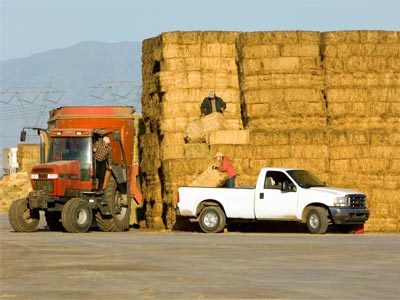
Usually two numbers determine if the gear is overloaded. GVWR and curb weight. It looks easy until you toss your luggage into the bed or travel into the cabin.
Gross curb weight rating (GVWR) isn’t a suggestion. This is a hard limit set by the manufacturer. That number covers everything. Steel, glass, fluids – oil, coolant, brake fluid. Even the full tank of gas. Plus all passengers and all cargo. This sticker is attached to the driver’s side door frame. Again check the user manual. If you can’t find a physical label, some online databases will list it.
The weight of the vehicle is the weight that appears on the scale when the car is unloaded. There are no passengers. There is nothing in the trunk. Just the machine itself and a full gas tank.
Subtract curb weight from GVWR. The result is payload capacity.
GVWR – curb weight = payload
Let’s say you have an older SUV. GVWR is 3500 lbs. The weight of the vehicle is 3000 lbs. This leaves you with 500 pounds. that’s it. It can carry five people weighing 100-pound. Or a very durable ATV. Not both.
But the truck is different. Designed for work. Their engineering changes the math slightly.
Truck load limits and engine options
Pick-up trucks don’t just have payload numbers; This depends on the axle ratio. Engine selection. The cab size. A standard cab with a short bed and base engine will carry less than a crew cab with a diesel and heavy suspension.
Manufacturers typically state the payload by engine and trim. Do not assume that the sticker on the door applies to all configurations. Replacing the standard bed with an aluminum bed reduces the weight of the vehicle. Payload capacity increases. However, adding a lift kit or larger tires adds weight. You lose the payload.
The most important thing is to know which GVWR sticker belongs to a specific VIN number. The basic model can weigh 1,500 pounds. The off-road package could increase the number to 1,800. Or reduce it to 1,200 because the suspension parts are heavier.
Check the label. Again.
It is not just what is written in the pamphlet. It’s about what your specific chassis can handle. Overloading can damage the frame. Mess with the suspension geometry. In the worst case, you lose control.
So how much can you actually throw in the back? Let’s start with the math. Then check your options. Aftermarket winches can be heavier than you think.
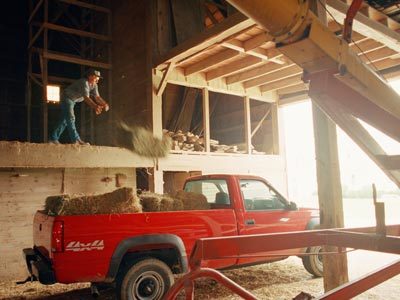
Payload is more than just weight. It’s a talent.
You cannot load drywall into a hatchback. You can’t transport 50 kilos of soil in a semi-trailer. Gearbox determines equipment.
In the US, trucks are classified according to GVWR (Gross Vehicle Weight Rating). The government believes there are eight categories. DOT focuses on three main areas. Both are important.
Here’s how the scale breaks down:
8 classes
GVWR includes the vehicle itself. Plus you too. Add fuel. Plus everything you packed in the bed and cabin.
| By weight | Total vehicle weight |
|---|---|
| Class 1 | 6,000 lb (2,722 kg) |
| Class 2 | 10,000 lb (4,536 kg) |
| Class 3 | 14,000 lb (6,350 kg) |
| Class 4 | 16,000 lb (7,258 kg) |
| Grade 5 | 19,500 lb (8,845 kg) |
| Grade 6 | 26,000 lb (11,793 kg) |
| Grade 7 | 33,000 lb (14,969 kg) |
| Grade 8 | >£33,000 |
Easy calculation. The heavier the volume, the bigger the device.
Light, medium, heavy
The DOT classifies these in the utility category.
Light covers levels 1 and 2. These are standard pickup trucks and vans. Think Ford F-150 or Chevrolet Silverado. They sell food. There is also a ladder. Maybe a little trailer.
Intermediate covers levels 3-5. These have started to penetrate the corporate world as well. Walk in. Delivery box truck. A mid-sized pickup truck equipped with special modified parts. They carry more stuff. Their premiums are higher.
Heavy is level 6 or higher. semi truck. dumper. concrete mill. If you need a rear window sticker, you might find it here.
When you know your class, you know your limits. Exceeding this will damage the suspension. Or worse. lose control.
Car payload
Cars work differently.
There are no classes. The sedan has no GVWR rating. Place the sticker only on the door frame.
Maximum capacity is listed. Measured in pounds.
Minus own weight. Flat head screwdriver. Minus the fuel. The rest is payload.
Goods. baggage. passenger.
Margins are tight. A midsize sedan will hold 850 pounds. An SUV? Maybe 1200.
However, it is not divided into categories. Just don’t overload it.
The difference between trucks and cars is intentional.
Trucks were born to cross borders. Cars are made to park under it.
Where does your current car weigh in?
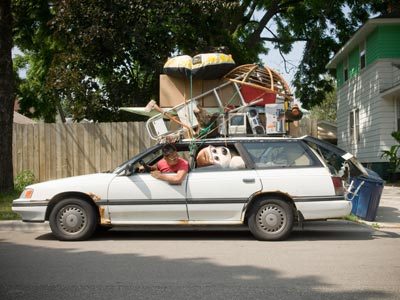
We tend to overlook the sedan’s cargo capacity. This may seem like an abstract concept when you head to the airport. If the total amount of children and luggage exceeds the limit, it is not counted. Trucks are different. They demand respect for numbers. Cars? We assume they handle it.
This assumption is dangerous.
Payload is more than just cargo. It’s the people. Manufacturers set standard limits: 150 lbs (68 kg) per person. Every seat counts. If the back row is empty, that’s not dead weight. That means you have 450 pounds (204 kilograms) of breathing room before anything goes wrong.
However, the payload is not static. It changes every time you throw something in the trunk. A full tank of gas weighs about 120 pounds. Roof racks increase resistance and pressure. The total weight does not exceed the gross weight (GVWR) minus the permissible unladen weight.
Most cars have a payload of 800-1200 pounds. That sounds like a lot. That is until you add three passengers, four suitcases and a dog. Suddenly your capacity is 90%. Suspension sag. The control performance decreases. Tires wear faster.
SUV loading capacity
People think SUVs are tanks. They’re not. They are cars with more space.
SUVs can carry more weight than sedans. But “more” is relative. The midsize crossover can handle up to 1,000 pounds. A full-size pickup truck can handles 2,000+. The difference is huge. But the principle remains the same.
SUVs have just as strict load restrictions as sedans. Exceed it, and you don’t get more space. It becomes unstable.
The biggest difference is in the structure. SUVs usually have reinforced bodies. better brakes. Bigger tires. This allows for a higher GVWR. But that doesn’t change the math. Passengers are still being counted. Equipment is still important.
Here’s the problem. People pack their SUVs like storage containers. They forgot rule number one. 150 pounds per person.
If you load five adults and a tent into an SUV, you’ll probably hit your limit before you even start driving. The center of gravity rises. The rollover risk increases. The braking distance increases.
Payload has nothing to do with how much you want to carry. It’s about whether the metal and rubber can handle it safely. If you ignore it, your car will pay the price. You pay in safety.
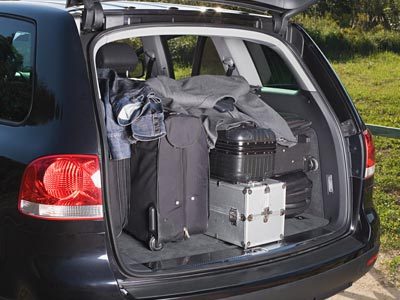
The SUV’s marketing pitch depends on a certain duality. You get the hauling capability of a work truck without compromising the passenger comfort of a sedan. It’s a compelling story. The reality is even more nuanced. The cargo capacity of an SUV is somewhere between a private car and a truck. Of course, it goes beyond the limits of an ordinary car. But it cannot match the inherent practicality of a pick-up bed.
Most manufacturers believe that maximizing cargo space is not important. Flip the back seat forward. A continuous floor is obtained. Because it is a large gear, it is easy to install. Easily slide into ski racks, tool boxes and large camping gear. However, the physical limits are severe.
Unlike trucks, SUVs have roofs. You cannot stack products indefinitely. The structure cannot support it. Even if it were possible, it would violate basic physics. The center of gravity shifts upward. The vehicle becomes unstable.
“Although SUVs are believed to be excellent for transporting cargo and driving them both on the road and off-road, many consider them potentially dangerous.”
Overloading your SUV doesn’t just destroy the suspension. It’s about rolling over. SUVs track higher than cars. A rollover risk increases exponentially with weight. The base is not designed to withstand the pressure of a fully loaded roof rack or a full bed.
Manufacturers are also paying attention to this trend. Consumers demanded safety. Electronic stability control (ESC) is standard. Helps keep the vehicle upright when pushed to its limits. However, technology has its limits.
Regulators stepped in and the National Highway Traffic Administration (NHTSA) ordered changes. Beginning in September 2004, all vehicles with a gross vehicle weight rating (GVWR) of less than 10,000 pounds must be equipped with the decal. It is attached to the door frame. It states the maximum combined weight of occupants and cargo. Ignore it at your peril.
The question remains. What if I absolutely need to bring more than what is stated on the label? Can you engineer a way around these limits?
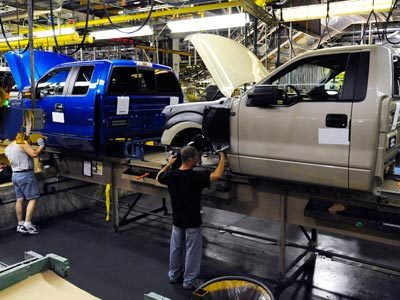
Can You Beat the Limits?
You know the numbers. You’ve checked the sticker on the door frame. Your truck has a load capacity of 1,500 pounds. But then you see it. A heavy-duty trailer. Custom gear. Maybe a few passengers who swear it doesn’t take up much space.
You want to push it.
Is it possible to carry more than the manufacturer says? Technically yes. Physically, sure. But legally and safely? That’s another story.
Manufacturers know you’ll try. That’s why they offer towing packages. These aren’t just stickers on the side of your truck. These are mechanical upgrades designed to withstand the strain of heavy loads.
Take a standard mid-size truck. Now look at the one with the Max Tow Package. You can see that the trailer harness is pre-installed. The hitch isn’t the cheap stamped steel kind; it’s a heavy-duty receiver. Safety chains are often included or reinforced.
Under the hood, things change too.
The engine might be swapped for a larger displacement unit. The cooling system gets bigger radiators and an updated transmission cooler. The brakes have bigger rotors and better calipers. All this prevents the vehicle from melting or shaking under the load.
But here’s the catch.
Payload capacity is not a suggestion. It’s a hard limit based on physics and engineering.
When you overload a vehicle, you’re not just risking a ticket. You’re risking your life. Overloading affects braking distance. It makes steering sluggish. It can cause tires to blow out at highway speeds. If you are stopped by the police, you may be charged with carrying a dangerous load. A ticket is the least of your worries. A blown tire on the interstate? It’s not fun.
Where to Find Your Numbers
If you’re torn between what you want to carry and what your car can handle, you need to check the specs. The table below shows the load limits by make and model in the mid-2000s.
Note the dash. A dash indicates that there is no information in this data or the model is not listed in this source with a specific payload number. Don’t guess. Check it out.
Acura payload
| Year | Model | Max Load (lbs) |
|---|---|---|
| 2006 | MDX | – |
| 2006 | RL | – |
| 2006 | RSX | – |
| 2006 | TL | – |
| 2006 | Toronto Stock Exchange | – |
| 2007 | MDX | 1158 |
| 2007 | RL | – |
| 2007 | RDX | 870 |
| 2007 | TL | – |
| 2007 | Toronto Stock Exchange | 850 |
| 2008 | MDX | 1158 |
| 2008 | RL | – |
| 2008 | RSX | 870 |
| 2008 | TL | – |
| 2008 | TSX | 850 |
| 2009 | MDX | 1158 |
| 2009 | RL | – |
| 2009 | RSX | 870 |
| 2009 | TSX | 850 |
Other Acura Information: GVWR, GAWR, GCWR, Payload, Vehicle Weight, Towing Capacity
Audi payload
| Year | Model | Max Load (lbs) |
|---|---|---|
| 2006 | A3 | – |
| 2006 | A4 | – |
| 2006 | A6 | – |
| 2006 | A8 | 1213 |
| 2006 | S4 | – |
| 2006 | TT | 728 |
| 2007 | A3 | – |
| 2007 | A4 | – |
| 2007 | A6 | – |
| 2007 | A8 | – |
| 2007 | Q7 | – |
| 2007 | RS4 | – |
| 2007 | S4 | – |
| 2007 | S6 | – |
| 2007 | S8 | 1213 |
| 2008 | A3 | – |
| 2008 | A4 | – |
| 2008 | A5 | – |
| 2008 | A6 | – |
| 2008 | A8 | – |
| 2008 | Q7 | – |
| 2008 | R8 | – |
| 2008 | RS4 | – |
| 2008 | S4 | – |
| 2008 | S5 | – |
| 2008 | S6 | – |
| 2008 | S8 | – |
| 2008 | TT | – |
| 2009 | A3 | – |
| 2009 | A4 | – |
| 2009 | A5 | – |
| 2009 | A8 | – |
| 2009 | Q7 | – |
| 2009 | R8 | – |
| 2009 | S4 | – |
| 2009 | S5 | – |
| 2009 | S8 | – |
| 2009 | TT | – |
Other information from Audi: GVWR, GAWR, GCWR, payload, vehicle weight, towing capacity
BMW payload
| Year | Model | Max Load (lbs) |
|---|---|---|
| 2006 | 325 | 325 1058 |
| 2006 | 330 | 330 1058 |
| 2006 | 525 | 525 1102 |
| 2006 | 530 | 530 1102 |
| 2006 | 550 | 550 1102 |
| 2006 | 650 | 650,838 |
| 2006 | 750 | 750 1058 |
| 2006 |
Chevrolet Payload Capacity (2006-2009)
You want to know how much weight a Chevrolet can actually carry. The numbers change depending on if you are looking at a compact crossover or a heavy-duty workhorse. It is not just about the model name. Trim levels and engine choices shift the maximum payload significantly.
For the 2006 model year, the Chevy Silverado 3500 HD is the king. It handles 5,169 lbs. That is massive capacity. The Silverado 2500 HD follows with 3,606 lbs. If you are looking at the half-ton Silverado 1500, you are looking at 1,913 lbs. The hybrid version drops that to 1,162 lbs.
The full-size vans are serious tools. The Express 1500 carries 2,306 lbs. The Tahoe sits at 1,522 lbs, while the Suburban 1500 is slightly higher at 1,731 lbs. Smaller trucks like the Colorado offer 1,532 lbs. The HHR is a light-duty hauler with only 900 lbs of payload.
By 2007, things shift slightly. The Tahoe jumps to 1,835 lbs. The Silverado 1500 Classic holds steady at 1,913 lbs, but the newer 2007 Silverado 1500 drops to 1,658 lbs. The Silverado 2500 HD sees a dip to 3,458 lbs, though the Classic edition remains at 3,606 lbs. The Suburban 1500 loses ground, dropping to 1,593 lbs.
The 2008 lineup keeps the Tahoe strong at 1,835 lbs. The Silverado 1500 is stable at 1,652 lbs. The heavy hitters remain consistent, with the Silverado 3500 HD hitting 3,621 lbs. The Tahoe Hybrid enters the mix with a payload of 1,830 lbs.
In 2009, the Express range expands. The Express 3500 takes on 4,147 lbs, and the Express 2500 handles 3,262 lbs. The Silverado 3500 HD climbs to 3,873 lbs. The Tahoe and Yukon platforms remain reliable at 1,830-1,835 lbs. The Colorado drops slightly to 1,250 lbs.
Chrysler Payload Capacity (2006-2009)
Chrysler’s payload numbers are generally lower than the truck manufacturers. Most sedans and coupes have no rated payload capacity listed, or it is negligible for practical towing/load purposes. The focus is on the SUVs and minivans.
In 2006, there is no payload data for the 300C, Pacifica, or Sebring. The PT Cruiser is not listed with a max payload for that year in this specific dataset.
The 2007 model year brings out the Aspen with 1,600 lbs. The Town & Country minivan carries 1,200 lbs. The PT Cruiser picks up a rating of 1,907 lbs. The Pacifica handles 889 lbs.
The 2008 Aspen stays at 1,600 lbs. The Town & Country holds its 1,200 lbs. The PT Cruiser drops to 889 lbs. The Pacifica loses a bit of capacity to 865 lbs.
The 2009 Aspen remains at 1,600 lbs. The hybrid version of the Aspen reduces payload to 1,500 lbs. The PT Cruiser and Town & Country show no specific max payload figures in this snapshot.
Dodge Payload Capacity (2006-2009)
Dodge builds vehicles for work. The Ram trucks dominate the payload charts. The 2006 Ram 3500 carries 4,660 lbs. The Ram 2500 handles 3,020 lbs. The half-ton Ram 1500 is rated for 1,750 lbs.
The Sprinter vans are impressive. The Sprinter Wagon 2500 carries 4,824 lbs. The Sprinter Van 2500 and 3500 both handle 3,950 lbs. The Grand Caravan minivan offers 1,700 lbs. The Dakota pickup provides 1,750 lbs.
2007 sees the Ram 3500 climb to 4,780 lbs. The Ram 2500 jumps to 3,130 lbs. The Ram 1500 stays at 1,750 lbs. The Sprinter Wagon 2500 drops to 3,074 lbs. The Nitro SUV carries 1,150 lbs. The Dakota dips slightly to 1,710 lbs.
In 2008, the Ram 1500 improves to 1,810 lbs. The Ram 2500 reaches 3,210 lbs. The Ram 3500 hits 4,870 lbs. The Sprinter Van 3500 increases to 4,530 lbs. The Durango holds 1,780 lbs. The Dakota drops to 1,630 lbs.
The 2009 Ram 3500 takes a hit, dropping to 3,560 lbs. The Ram 2500 holds at 3,260 lbs. The Ram 1500 drops significantly to 1,490 lbs. The Durango Hybrid offers 1,500 lbs. The Sprinter Wagon 2500 remains at 3,074 lbs. The Journey and Avenger have no listed payload capacity.
Ford Payload Capacity (2006-2009)
Ford’s Super Duty trucks are built for heavy loads. The 2006 E 350 Super Duty van carries 4,165 lbs. The F 350 handles 4,000 lbs. The F 250 provides 3,100 lbs. The E 250 van is rated for 3,435 lbs. The F 150 offers 1,640 lbs.
The Edge crossover starts with 1,011 lbs in 2007. The Escape Hybrid holds 1,040 lbs. The Explorer sits at 1,520 lbs. The Expedition carries 1,822 lbs. The F 450 enters the chart in 2008 with a massive 6,120 lbs payload.
The 2009 F 150 jumps to 3,030 lbs, a significant increase from previous years. The E 150 van holds 3,220 lbs. The E 350 Super Duty drops slightly to 4,060 lbs. The F 450 payload is listed as 3,900 lbs in 2009, which seems inconsistent with the 2008 figure, but that is the data point. The Ranger truck remains steady at 1,260 lbs.
GMC Payload Capacity (2006-2009)
GMC shares DNA with Chevrolet, so the numbers are often similar. The 2006 Sierra 3500 carries 4,658 lbs. The Sierra 2500 handles 4,058 lbs. The Savana 3500 van holds 4,147 lbs. The Canyon truck provides 1,547 lbs.
In 2007, the Sierra 1500 increases to 1,952 lbs. The Sierra 2500 drops to 3,892 lbs. The Yukon climbs to 1,835 lbs. The Yukon XL is rated at 1,593 lbs.
The 2008 Sierra 1500 is stable at 1,947 lbs. The Yukon Hybrid matches the Yukon at 1,830 lbs. The Sierra 2500 remains at 3,892 lbs.
By 2009, the Sierra 3500 hits 4,812 lbs. The Sierra 2500 climbs to 3,924 lbs. The Sierra 1500 drops to 1,842 lbs. The Canyon loses capacity, dropping to 1,422 lbs. The Yukon and Yukon Hybrid hold steady at 1,830 lbs. The Savana vans remain consistent at 2,306 lbs (1500), 3,262 lbs (2500), and 4,147 lbs (3500).
Check out Honda’s model range from 2006 to 2009. Honda’s GVWR limits are shown here. There is very little information about some cars. Numbers matter to others.
2006-2009 Honda payload data
The Ridgeline is unique. The 2006, 2007, 2008 and 2009 models have a weight capacity of 1549 lbs. This is pretty sturdy for a unibody pickup.
The Odyssey is also consistent. It carries 1349 lbs across all four years.
The Civic gets a specific number in 2007 and 2008. The weight is 385 lbs. It’s low. This is a small car. You don’t haul gravel in a Civic.
Elements decrease slightly over time. From 2006 £675. In 2007 and 2008 it was just £675. Data for 2009 are not available.
The pilot was launched in 2007. The weight is 1322 lbs. The same numbers continued in 2008 and 2009.
The Insight? Only 2006. Holds up to 400 lbs.
Most other Honda models such as the Accord, CR-V, Fit and S2000 do not have data for those years in this source.
Other Honda specifications:
– Honda GVWR
– Honda GAWR
– Honda GCWR
– Honda Cargo Carrying Capacity
– Honda Curb Weight
-Honda Towing Capacity
Hummer: Heavy truck
Lobster data is weak. But if it exists, it will be in large quantities.
The H2 weighed 2,200 pounds in 2008 and 2009. That’s a very large cargo capacity for an SUV of its time.
H3 is very stable. In 2006, 2007 and 2008 it had a capacity of 1150 lbs. In 2009, it jumps to 1312 lbs.
The H3T was introduced only in 2009 and weighs 1090 kilograms.
The 2006 H1 Alpha has a weight capacity of 3087 lbs. It’s a truck designed for work.
Data for the second half of 2006 or 2007 are not available. The data are only available for the years 2008 and 2009.
More HUMMER Specs:
– HUMMER GVWR
– HUMMER GAWR
– HUMMER GCWR
– Hummer cargo capacity
– Hummer own weight
– Hummer towing capacity
Hyundai: Minimal Listings
Hyundai’s payload list is short. It’s very short.
Information for each model is not included for 2006, 2007 and 2008. Accent. Azera. Elantra. Santa Fe. Sonata. Tiburon. Tucson. Veracruz. All dashes.
2009 was no different. Azera. Genesis. Sonata. It’s all cheeky.
It seems that the source data has stopped tracking Hyundai payload for these years. Or maybe the numbers aren’t public. Anyway, nothing to do here.
More Hyundai Specs:
– Hyundai GVWR
– Hyundai GAWR
– Hyundai GCWR
– Hyundai Cargo Carrying Capacity
– Hyundai Curb Weight
– Hyundai Towing Capacity
Infiniti: Luxury Load Limits
Infiniti offers concrete numbers.
The FX35 is consistent. In 2006, 2007, and 2008, it weighed 1,183 pounds. In 2009, it jumps to 1213 lbs.
From 2006 to 2008, the FX45’s weight remained at 1,091 pounds. In 2009, it becomes the FX50 with 1185 lbs.
The QX56 is a big crane. In 2006 it was £1,440. In 2008 and 2009 it was £1,553.
The G37 was launched in 2008 and weighs 1040 kilograms.
Limited information is available on the M35 and M45 models. The 2008 M35 was listed at £996. The 2008 M45 was quoted at £1010.
The G35 has 2006 numbers (£886) but no 2007 or 2008 numbers.
Infiniti detailed specifications:
– Infiniti GVWR
– Infinity Gaul
– Infinity GCWR
– Infiniti cargo capacity
– Infiniti vehicle weight
– Infinity towing capacity
Isuzu: The Ascender Era
Isuzu is still available. Just barely.
From 2006 to 2008, the Ascender’s weight remained stable at 1,133 pounds.
All i-series trucks are different.
The 2006 i-280 has a weight capacity of 1532 lbs.
The 2007 i-290 has a weight capacity of 1532 lbs.
For 2008, the i-290’s weight has dropped to 1,512 pounds.
The 2006 i-350 carries 1190 lbs.
The 2007 i-370 has a weight capacity of 1516 lbs.
The 2008 i-370 weighs just 1,260 pounds.
The variations are small. But Ascender is the most reliable.
Isuzu detailed information:
-Isuzu GVWR
– Isuzu Gaur
– Isuzu GCWR
– Isuzu cargo capacity
-Isuzu vehicle weight
– Isuzu towing capacity
Jaguar: precision technology, lower payload
Jaguar’s payload figures are low. XKR cannot be filled with gravel.
The 2006-2008 X-Type weighs 1,058 lbs. Data for 2009 are not available.
The XK series was released in 2008 and 2009.
The 2008 XK has a weight capacity of 815 pounds.
The 2008 XKR has a weight capacity of 772 pounds.
The 2009 XK Coupe has a cargo capacity of 815 lbs.
The 2009 XKR has a weight capacity of 772 pounds.
Most other models, such as the S-Type, XJ8 and XJR, have no numbers.
Jaguar Detailed Specifications:
– Jaguar GVWR
– Jaguar GAWR
– Jaguar GCWR
– Jaguar loading capacity
– Jaguar curb weight
– Jaguar towing capacity
Jeep: Number of main vehicles
Jeep numbers are useful.
The number of chiefs has decreased slightly in recent years. 2006 £1620 2007 £1310 2008 & 2009 £1300
Grand Cherokee variant. 2006 £1100 2007 £1050 2008 and 2009 £1180.
From 2006 to 2009, Liberty’s weight remained stable at 1150 kilograms.
Wranglers and Wranglers are infinitely more stable. From 2006 to 2008, both models weighed 1000 kilograms. For 2009, the weight of the Wrangler Unlimited jumps to 1150 kilograms.
By the numbers, the Compass and Patriot consistently weigh in at 925 pounds.
Jeep Detailed Specifications:
– Jeep GVWR
– Jeep GAWR
– Jeep GCWR
– Jeep loading capacity
– Jeep vehicle weight
– Jeep towing capacity
KIA: The Borrego trend
Kia’s list is short again.
From 2006 to 2008, the Rio and Rio 5 carried 1,273 and 1,200 pounds, respectively. Data for 2009 are not available.
The Sportage weighs about 1,200 kilograms. 1195 people in 2006. 1289 people in 2007. 1195 people in 2008. There is no data for 2009.
Sorento’s weight remains stable at around 1200-1300 lbs. 1,202 cases in 2006. 1,318 cases in 2007. 1,277 cases in 2008. There is no data for 2009.
The 2007 Sedona has a weight capacity of 1,532 pounds.
Payload isn’t just a number on a sticker. It’s the hard limit of what you can cram into your vehicle before you start compromising safety, suspension geometry, and braking distance. We’re looking at the 2006 to 2009 window here. A time of transition. Some brands were consolidating. Others were trying to prove they could build SUVs that didn’t float away in a crosswind.
The data below tells you exactly how much weight each model could handle. Drivers, passengers, cargo, and fuel all count against this limit. Exceed it, and you’re playing Russian roulette with your tires.
Mazda Payload
Mazda’s lineup in this era was a mix of practical trucks, quirky crossovers, and pure driving machines. The B-Series trucks were rebadged Ford Rangers. This meant they shared the same payload architecture.
For the 2006 Mazda B-Series, the payload capacity varies significantly by engine and drivetrain. The Mazda B2300 and B4000 models both sit at 1260 lbs. The B3000 is the outlier here, capable of carrying 1680 lbs. That’s a massive difference. If you’re hauling gravel, the B3000 is the one you want. If you’re looking at passenger cars, the numbers drop.
The Mazda5 minivan handles 1239 lbs. The Mazda6 sedan manages 1319 lbs. But if you bought the high-performance MazdaSpeed6, that payload plummets to 963 lbs. Stiffer suspension, heavier brakes, and performance tires eat up your carrying capacity. The MPV minivan offers 1506 lbs, making it one of the more utilitarian options in the lineup. The MX-5 Miata? 637 lbs. Don’t try to fill the back seat with tools.
The RX-8 handles 779 lbs in 2006. By 2007, it drops slightly to 765 lbs. The Tribute crossover sits around 988 lbs in 2006, moving up to 1057 lbs in 2008, with the Hybrid version slightly heavier at 1083 lbs. The CX-7 and CX-9 entered the scene in 2007. The CX-9 starts with 1493 lbs. The CX-7 payload is not listed in these specific records, likely due to trim variations or data gaps in the source. The MazdaSpeed3 also lacks a listed payload figure here.
By 2009, the B2300 payload dips to 1200 lbs, while the B4000 holds steady at 1260 lbs. The RX-8 drops further to 754 lbs. The Mazda6 settles at 1082 lbs. The Tribute is absent from the 2009 list.
Payload limits are strict. They don’t care about your intentions.
Mercedes-Benz Payload
Mercedes-Benz in the mid-2000s was all about luxury and size. But size brings weight. And weight eats payload.
In 2006, the ML350 can handle 1616 lbs. The ML500 is slightly less, at 1496 lbs. The R-Class is a beast, offering 2000 lbs of payload capacity. That’s van territory. The S-Class, E-Class, and C-Class have no listed payload, likely because their primary design focus was not heavy hauling. The SLR McLaren is listed, but with no payload data, suggesting it’s strictly a driver’s car with minimal utility focus.
2007 sees the introduction of the GL450 with 1620 lbs payload. The GL320 is lighter at 1086 lbs. The ML350 jumps to 1635 lbs. The ML63 AMG drops to 1257 lbs. Again, performance variants sacrifice payload for handling precision. The R-Class holds 1635 lbs. The SLR McLaren has a payload of 626 lbs.
2008 brings the G500 with a robust 1764 lbs payload. The G55 is lower at 1433 lbs. The GL550 and ML550 both offer 1620 lbs. The SLR McLaren payload plummets to 342 lbs. This is a supercar. It’s not carrying your groceries.
By 2009, the ML63 AMG payload rises slightly to 1300 lbs. The R-Class drops to 1365 lbs. The ML350 remains stable at 1635 lbs. The C-Class, S-Class, and SL-Class remain without listed payload figures in this dataset.
Mercury Payload
Mercury was the upscale sibling to Ford. In this era, they shared platforms heavily. The Mountaineer is essentially a Ford Explorer. The Mariner is a Ford Escape.
In 2006, the Mountaineer handles 1549 lbs. The Monterey minivan offers 1320 lbs. The Mariner crossover has 1075 lbs payload. The Mariner Hybrid is slightly lighter in capacity at 920 lbs. The Grand Marquis and Milan have no listed payload.
2007 data mirrors 2006 for the most part. The Mountaineer payload drops to 1443 lbs. The Mariner stays at 1075 lbs. The Mariner Hybrid holds at 920 lbs. The Monterey remains at 1320 lbs.
2008 sees the Mariner payload decrease to 1059 lbs. The Mariner Hybrid holds steady at 920 lbs. The Mountaineer remains at 1443 lbs. The Sable sedan has no payload listed.
2009 data is nearly identical to 2008. The Mariner is 1059 lbs. The Mariner Hybrid is 920 lbs. The Mountaineer is 1443 lbs. The Milan, Grand Marquis, and Sable lack payload figures.
MINI Payload
MINI was growing up in the mid-2000s. They added size. They added space. But they didn’t turn into trucks.
The Cooper Hardtop consistently handles 816 lbs of payload from 2006 through 2008. The Cooper Convertible is slightly less capable at 771 lbs. The lighter roof structure and lack of a fixed roof likely contribute to the lower limit.
In 2008, the Cooper Clubman appears with a payload of 816 lbs. It matches the hardtop.
2009 sees the high-performance John Cooper Works variants enter the fray. The John Cooper Works Hardtop and John Cooper Works Clubman both handle 816 lbs. Performance tuning doesn’t necessarily reduce payload capacity, provided the suspension and frame can handle the stress.
Mitsubishi Payload
Mitsubishi was pushing the Outlander and Raider hard in this era. The Raider, co-developed with Dodge, is a truck-based SUV. It has the highest payload in the lineup.
In 2006, the Raider handles 1590 lbs. The Montero has 1165 lbs. The Endeavor has 1055 lbs. The Lancer has 981 lbs. The Galant has 969 lbs. The Outlander is lighter at 904 lbs. The Eclipse coupe is at 794 lbs.
2007 data shows the Outlander payload jumping significantly to 1538 lbs. This is a major increase. The Raider drops slightly to 1580 lbs. The Galant drops to 937 lbs. The Endeavor holds at 1055 lbs. The
Payload capacity isn’t just a number on a sticker. It’s the hard limit on what you can actually put in your vehicle before things go wrong. We are looking at Saturn, Scion, Subaru, Suzuki, Toyota, Volkswagen, and Volvo for model years 2006 through 2009. This data is raw. No fluff. If a model has a dash, there was no public payload data available or the figure was negligible for general consumer tracking.
Saturn Payload
Saturn was struggling. The brand was winding down, which explains why the payload numbers look sparse and inconsistent.
2006 Saturn Payload
The 2006 Saturn Ion doesn’t list a payload figure. The Relay minivan is solid at 1,350 lbs. The VUE crossover sits at 1,331 lbs.
2007 Saturn Payload
The new Aura sedan offers 1,009 lbs of payload. The Aura Hybrid has no listed data. The Ion remains blank. The Outlook (basically a Buick Envision) is strong at 1,678 lbs. The Relay drops slightly to 1,354 lbs. The Sky roadster has no payload listed. The VUE holds steady at 1,331 lbs. The VUE Hybrid jumps to 1,511 lbs.
2008 Saturn Payload
The Astra coupe delivers 893 lbs. The Aura stays at 1,009 lbs. The Aura Hybrid is unlisted. The Outlook remains at 1,678 lbs. The Sky is blank. The VUE drops significantly to 1,000 lbs. The VUE Hybrid falls to 1,111 lbs.
2009 Saturn Payload
The Astra has no data. The Aura is still 1,009 lbs. The Aura Hybrid is blank. The Outlook increases slightly to 1,709 lbs. The Sky is blank. The VUE is stuck at 1,000 lbs. The VUE Hybrid remains at 1,111 lbs.
Scion Payload
Scion was all about youth, tuning, and keeping it simple. But for payload, the numbers are frustratingly absent.
2006-2009 Scion Payload Data
The tC coupe (2006, 2007, 2008, 2009) has no listed payload. The xA (2006, 2007) is blank. The xB (2006, 2008, 2009) is blank. The xD (2008, 2009) is blank.
Basically, if you are carrying heavy gear in a Scion, you are guessing. There is no public specification provided for these model years.
smart Payload
Smart focused on urban mobility. Small cars mean small payloads.
2008 smart Payload
The fortwo is rated for 463 lbs. That’s it. It’s a two-seater city car. Don’t try to fit a full tool chest in there.
Subaru Payload
Subaru built rugged, boxy cars. The payload numbers reflect that utilitarian mindset.
2006 Subaru Payload
The B9 Tribeca is heavy-duty at 1,560 lbs. The Baja (a car-based pickup) is 1,070 lbs. The Forester is 1,060 lbs. The Impreza Sedan is tight at 955 lbs. The Impreza Wagon is 995 lbs. The Impreza Outback Sport is 1,132 lbs. The WRX STI is surprisingly low at 794 lbs. The Legacy Sedan is 1,200 lbs. The Legacy Wagon is 1,300 lbs. The Outback is 1,245 lbs.
2007 Subaru Payload
The B9 Tribeca holds 1,560 lbs. The Forester drops to 1,010 lbs. The Impreza Sedan is 955 lbs. The Impreza Wagon is 995 lbs. The Impreza Outback Sport is 1,132 lbs. The Legacy Sedan falls to 1,055 lbs. The Legacy Wagon is 1,290 lbs. The Outback drops significantly to 995 lbs.
2008 Subaru Payload
The Forester is 1,010 lbs. The Impreza Wagon is 976 lbs. The Impreza Sedan is 856 lbs. The Impreza Outback Sport is 1,082 lbs. The WRX STI recovers to 1,080 lbs. The Legacy is 1,055 lbs. The Outback is 1,085 lbs. The Tribeca tanks to 660 lbs.
2009 Subaru Payload
The Forester jumps to 1,230 lbs. The Legacy is 1,055 lbs. The Outback is 1,078 lbs. The Tribeca stays at 660 lbs.
Suzuki Payload
Suzuki was trying to compete with the crossover boom. The XL7 is the big dog here.
2006 Suzuki Payload
The Aerio is 955 lbs. The Forenza is 981 lbs. The Grand Vitara is 1,175 lbs. The Reno is 941 lbs. The Verona has no data. The XL7 is 1,168 lbs.
2007 Suzuki Payload
Most models have no listed payload. The XL7 is the only one with a number: 1,626 lbs.
2008 Suzuki Payload
The Forenza is 926 lbs. The Grand Vitara is 1,178 lbs. The Reno is 926 lbs. The SX4 is 893 lbs. The XL7 is 1,626 lbs.
2009 Suzuki Payload
The Equator has no data. The Grand Vitara is blank. The SX4 is 893 lbs. The XL7 is blank.
Toyota Payload
Toyota dominates this list. High payload numbers across the board.
2006 Toyota Payload
The 4Runner is 1,285 lbs. The Avalon is 1,075 lbs. The Camry is 1,059 lbs. The Camry Solara is blank. The Corolla is 1,055 lbs. The Highlander is huge at 1,840 lbs. The Highlander Hybrid is 1,605 lbs. The Land Cruiser is 1,500 lbs. The Matrix is 1,166 lbs. The Prius is 1,085 lbs. The RAV4 is 1,130 lbs. The Sequoia is 1,510 lbs. The Sienna is 1,570 lbs. The Tacoma is 1,540 lbs. The Tundra is 1,835 lbs.
2007 Toyota Payload
The 4Runner is 1,285 lbs. The Avalon is 1,070 lbs. The Camry is blank. The Camry Hybrid is blank. The Camry Solara is blank. The Corolla is 1,055 lbs. The FJ Cruiser is 1,280 lbs. The Highlander is 1,844 lbs. The Highlander Hybrid is 1,605 lbs. The Land Cruiser is 1,500 lbs. The Matrix is 1,1